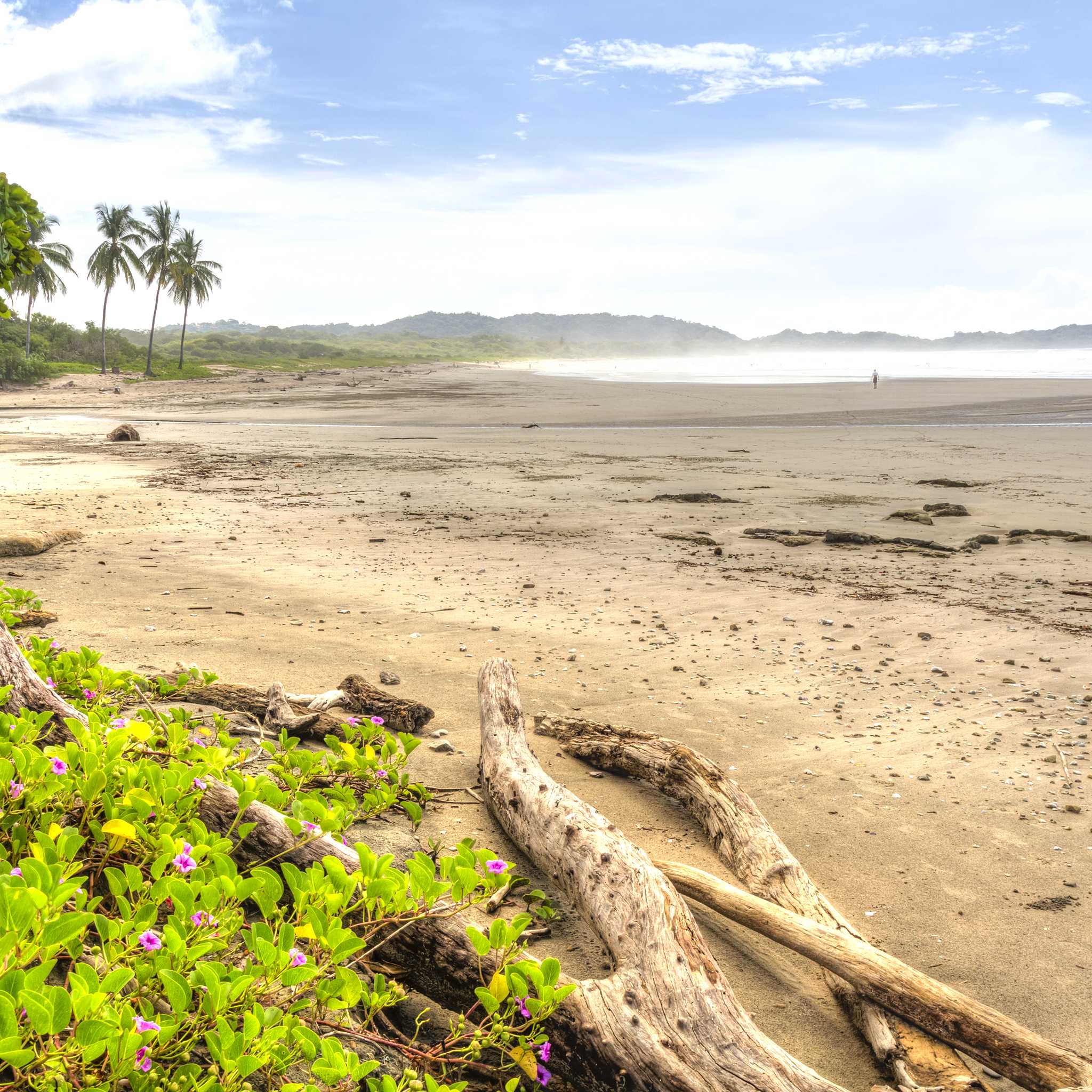
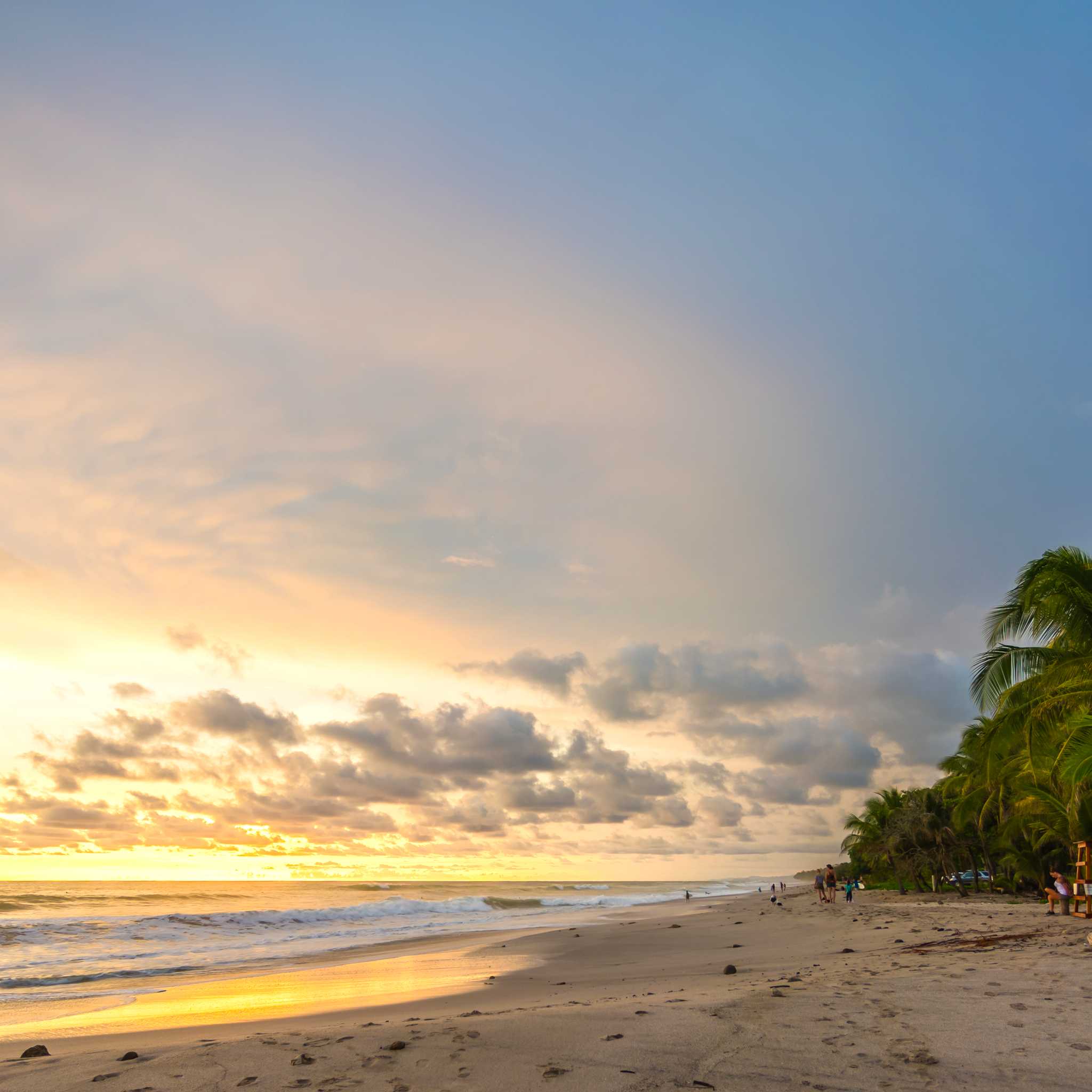
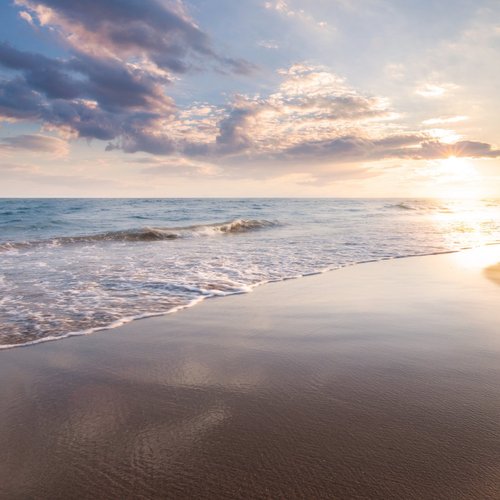
Nosara is a great destination for families. Playa Guiones offers calm morning conditions that are well-suited for beginner surfers of all ages. Wildlife sanctuaries run family-friendly tours, and ziplining is open to children from age five. The region's Blue Zone lifestyle means fresh, healthy food is easy to find. Nosara's beach scene is relaxed and welcoming, though parents should always supervise children near the water.
Nosara is a spread-out community, so having access to a vehicle makes exploring much easier. Many roads are unpaved and can become rough during the rainy season, making a 4WD vehicle a practical choice. Within Playa Guiones, tuk-tuk taxis are a fun and convenient way to get around without a car. The town of Bocas de Nosara sits roughly 5 kilometers (3 miles) inland from the main beach area.
Nosara is generally considered safe for visitors and has a welcoming, community-oriented atmosphere. Standard travel precautions apply: keep an eye on your belongings, avoid leaving valuables on the beach, and stay aware of your surroundings at night. The nearest hospital is in Nicoya, about an hour and a quarter away, so travel insurance with medical coverage is strongly recommended.
Nosara is best known for surfing at Playa Guiones, yoga retreats, and wildlife encounters. Popular activities include kayaking through mangroves, ziplining, horseback riding, hiking, and visiting wildlife sanctuaries such as SIBU Sanctuary and International Animal Rescue Costa Rica, where injured howler monkeys are rehabilitated. The Ostional Wildlife Refuge offers rare chances to see olive ridley sea turtle nesting between July and December.
The official currency of Costa Rica is the Costa Rican colon (CRC). U.S. dollars are widely accepted in Nosara, though you will typically get a better rate paying in colones. ATMs are available in Playa Guiones and around town, but they can be unreliable, so it's a good idea to carry some cash. Most established restaurants and hotels accept major credit cards.
Spanish is the official language of Costa Rica. In Nosara, English is widely spoken due to the large expat community and established international visitor scene. Most restaurant menus are available in both English and Spanish, and hotel staff typically communicate well in English. Downloading a translation app is still handy for exploring smaller local spots or markets.
Costa Rican food is fresh, hearty, and deeply local. Look out for a classic "casado," a traditional plate of rice, beans, plantains, salad, and a protein. Eating at a "soda" (a small local diner) is a beloved rite of passage for any visitor. Nosara is also celebrated for its health-conscious food scene, with fresh juices, acai bowls, and excellent seafood widely available throughout town.
Nosara has two main seasons. The dry season runs from December through April, bringing sunny skies and calmer conditions, making it the most popular time to visit. The rainy or "green" season runs from May through November, with afternoon showers but lush scenery, fewer crowds, and great surf. Surfers often prefer the green season for its consistent waves.