Many Italian restaurants include a "coperto" (cover charge) of 1-3 euros per person for bread and table service. Tipping is not mandatory but rounding up or leaving 5-10% for good service is appreciated.
Bari Vecchia (the old town) is very walkable with narrow pedestrian streets. However, the marble stone surfaces can be slippery, and some areas have uneven cobblestones that may challenge wheelchair access.
Bari is generally safe for visitors. The city has improved significantly in recent years. Use standard precautions like keeping valuables secure and staying alert, especially in crowded areas and near the train station.
Must-try dishes include orecchiette pasta with turnip greens, focaccia barese, fresh seafood, panzerotti (fried pastry pockets), and gelato. The region is also known for excellent olive oil and local wines.
Italy uses the euro (EUR) as its official currency. Credit cards are widely accepted in most establishments, though it's advisable to carry some cash for smaller shops and local markets.
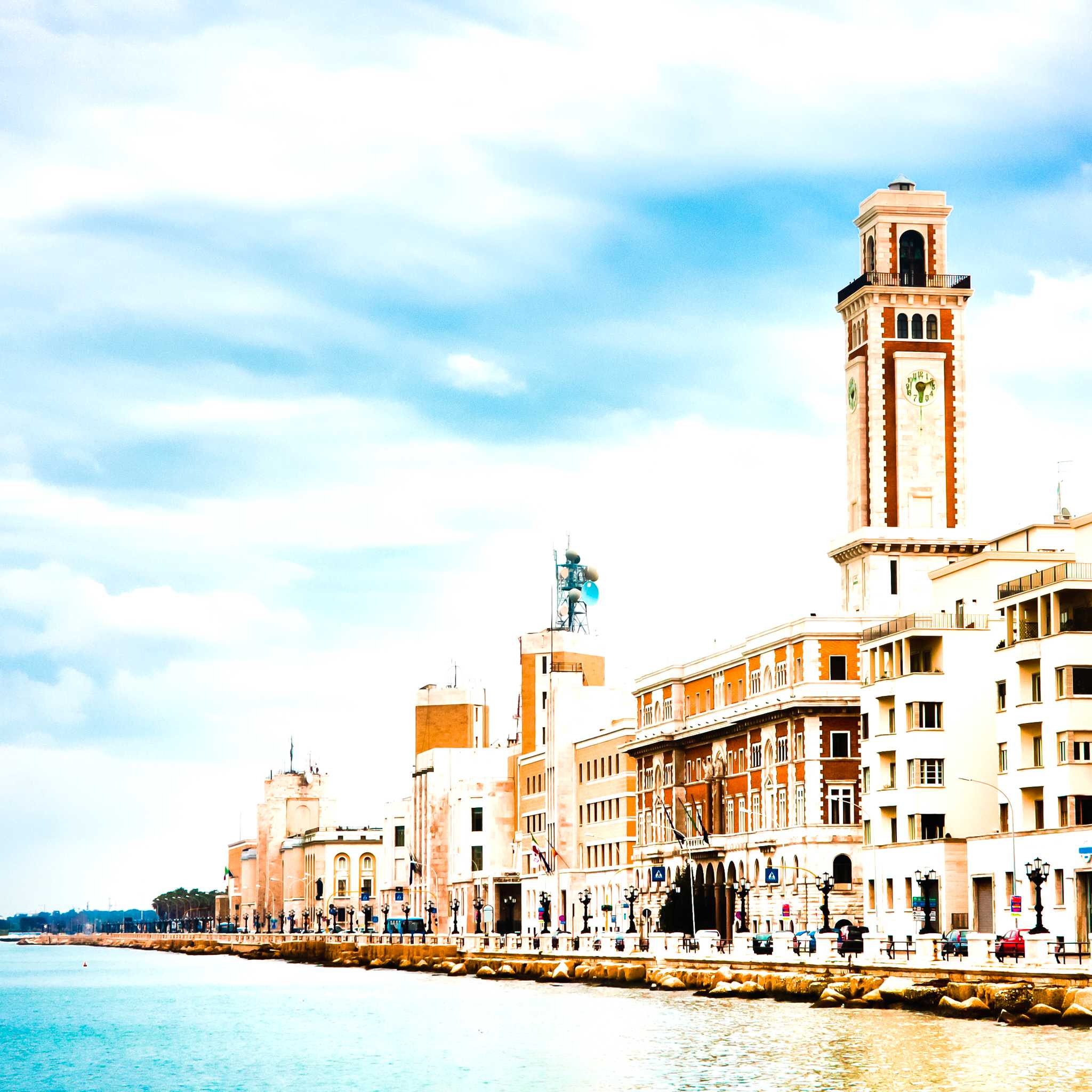
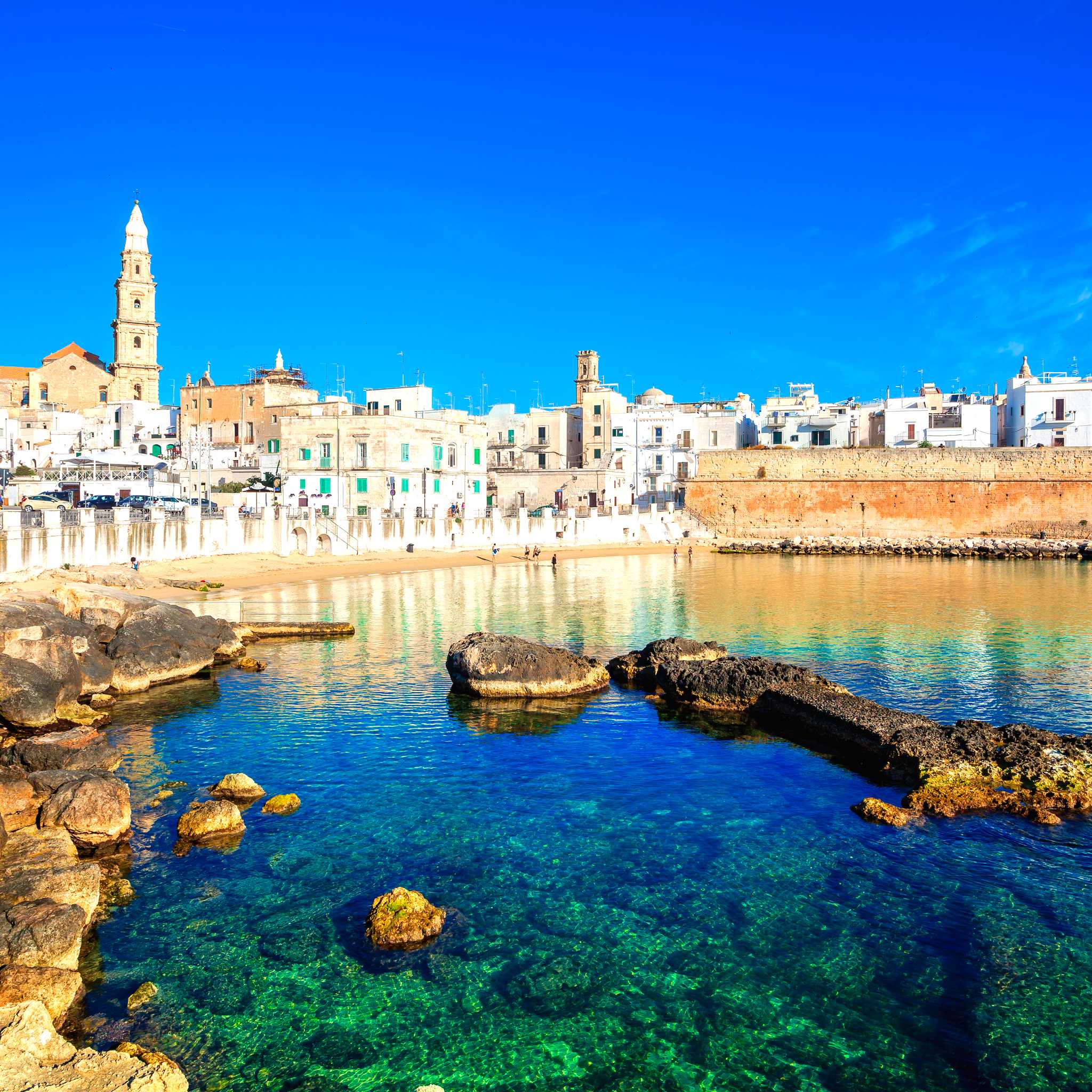
Bari is famous for its historic old town (Bari Vecchia) with narrow medieval streets, the Basilica of San Nicola where Saint Nicholas is buried, fresh pasta made on the streets, and its role as a major Adriatic port.
Italian is the official language of Italy. In work areas and among younger people, basic English is often spoken, though learning a few Italian phrases enhances interactions with locals.
The best time to visit Bari is during spring (April-June) and early autumn (September-October) when temperatures are warm but comfortable and there are fewer crowds than in peak summer.