Yes. Salamanca is only about 65 km (40 miles) away, under an hour's drive, so the two pair easily in one itinerary. Zamora's walled old town and Castle make a calmer counterpoint to Salamanca's larger university-town crowds and plazas.
Yes, and it is one of Zamora's natural advantages. Its position between Salamanca and Valladolid — each roughly an hour away — makes it an ideal stop on a longer route. A Daytrip driver can take you through Zamora en route between cities, with a planned stop to explore the historic centre before continuing to your final destination. This turns an ordinary transfer into a full day of discovery, with no extra logistics to manage on your end.
Zamora sits about 260 km (160 miles) northwest of Madrid, roughly a 2.5 to 3 hour drive depending on traffic. A private transfer covers that distance door to door, so you leave when you're ready and arrive relaxed, without hauling luggage through a station.
Zamora sits at a natural crossroads in Castile and León. From Salamanca the drive is roughly 67 km (42 miles) and takes around 40 minutes. From Valladolid it is approximately 97 km (60 miles), around an hour by road. From Madrid the journey is around 259 km (161 miles), typically 2.5 to 3 hours depending on traffic. A private transfer is the most direct option from any of these cities — no connections, no timetables, and door-to-door service straight into the historic centre.
Half a day comfortably covers the Stone Bridge, Castle, Cathedral, and Plaza Mayor, all within walking distance in the compact old town. Give it a full day if you want to linger among the Romanesque churches along the way or explore the park surrounding the Castle at an easier pace.
Absolutely. Zamora punches well above its size. The historic centre is compact and walkable, meaning you can cross the medieval Stone Bridge, stand before the Cathedral's extraordinary Byzantine dome, and wander past a concentration of Romanesque churches found nowhere else in Europe — all in a single day. It is one of those places that feels genuinely discovered rather than overrun, and that atmosphere alone makes it worth the journey.
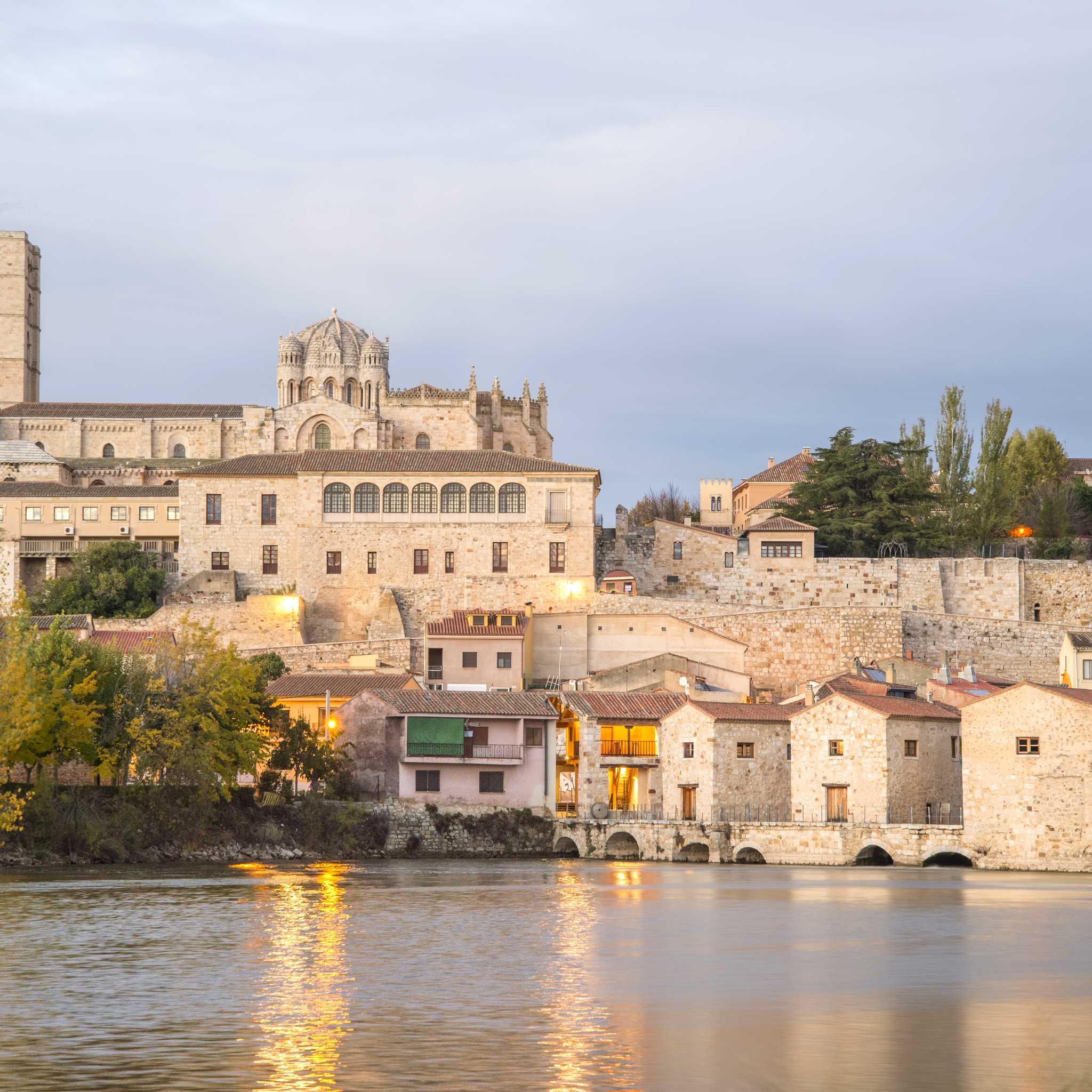
Start by crossing the Puente de Piedra, the ancient Stone Bridge still in use after centuries. From there, the Cathedral is the centrepiece — its scaled Byzantine dome is one of the most original works of medieval architecture in Spain. San Juan de Puerta Nueva in the Plaza Mayor, with its signature circular window, and Santa María Magdalena, whose southern doorway is considered the city's finest carved portal, are both within easy walking distance. Zamora Castle, perched above the Duero gorge, rounds out the day with panoramic views over the river valley.
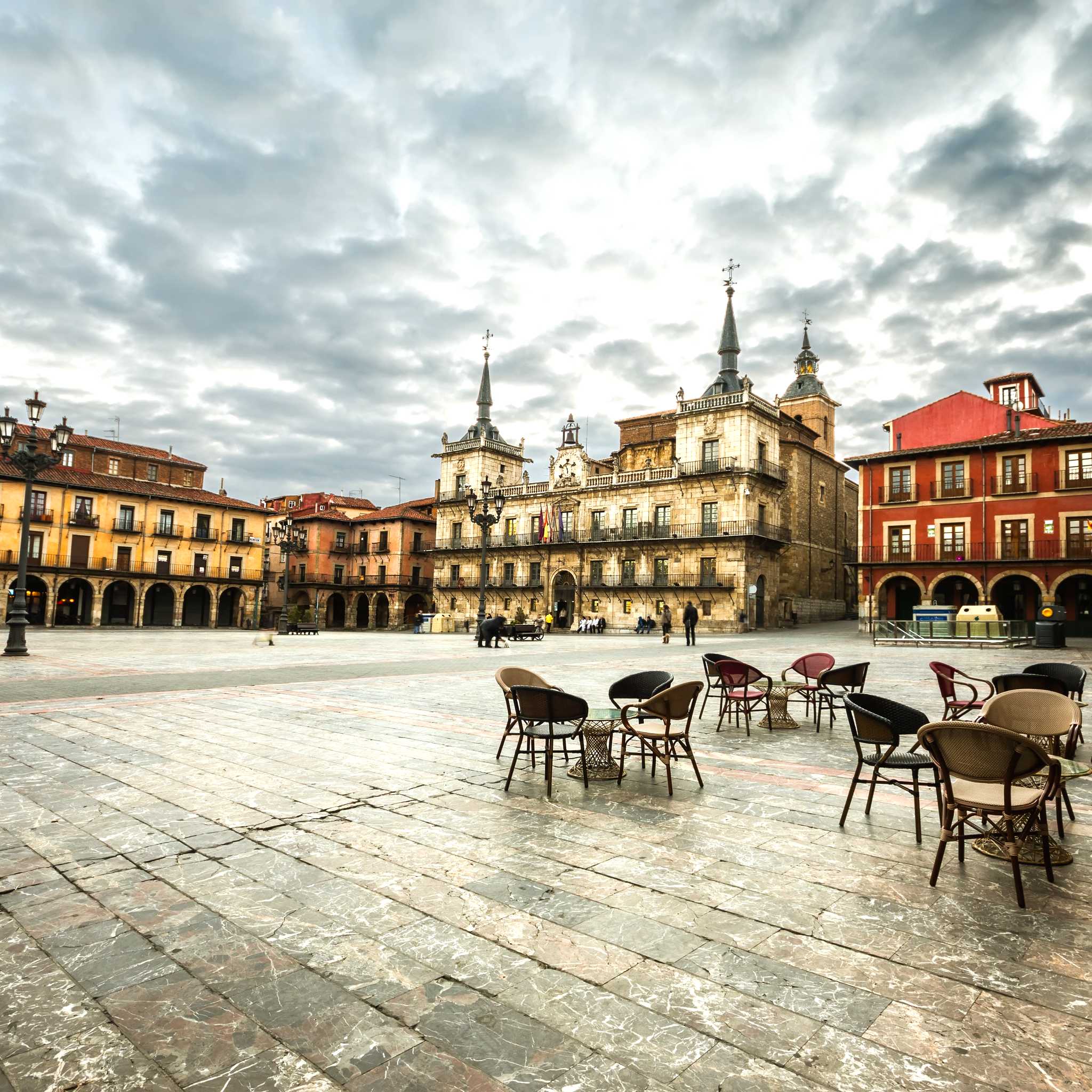
Cross the medieval Stone Bridge over the River Duero into the old town, then head to the Castle, a Moorish-origin fortress that still preserves its keep, gate, and moat inside a scenic park. Next door, the 12th-century Cathedral is roofed in distinctive stone flakes with a 13th-century Romanesque tower. From there, cobbled streets lead past a striking number of Romanesque churches, often said to be the highest concentration in Europe, to Plaza Mayor and the Renaissance Palace of the Counts of Alba de Aliste.
Zamora's Holy Week processions are among the oldest and most solemn in Spain, recognized as of International Tourist Interest. That sense of tradition runs through the city year-round, giving Zamora a quieter, more reflective character than some of the region's busier historic towns.
Zamora's Semana Santa is widely considered the most solemn and historically authentic Holy Week in Spain. Sixteen brotherhoods carry out seventeen processions through the old city, with traditions traceable to 1179. What sets it apart is its atmosphere: no marching bands, no carnival noise — instead, torchlight, silence, and male choirs echoing off Romanesque stone. It was declared of International Tourist Interest in 1986 and is the only Holy Week in Spain to hold the status of Site of Cultural Interest. The city's population swells to around 300,000 during this period, so if you plan a visit around Easter, booking your transfer well in advance is strongly recommended.
Zamora holds the highest concentration of Romanesque architecture in Europe — more than 20 churches within the city limits, 14 of them in the old town alone. While Salamanca draws visitors for its golden sandstone university and Segovia for its Roman aqueduct, Zamora occupies a category of its own: an intact medieval city that has never been overshadowed by mass tourism. Walking its streets genuinely feels like stepping into the 12th century, without the crowds that surround more famous destinations.
Trains connect Madrid and Zamora directly in under two hours, one of the faster regional rail links in Spain. A private transfer trades that speed for flexibility: no fixed timetable to build your day around, and a drop-off right in the historic center instead of a walk from the station, which matters most if you're traveling with family or folding Zamora into a longer route.