Yes. Vrsar's location on the west coast of the Istrian peninsula puts Poreč and Rovinj within a short drive, making it easy to pair a couple of hours in Vrsar's old town with a longer stop in one of its more built-up neighbors. A private transfer lets you set your own order and pace between towns instead of working around bus connections between them.
Vrsar sits close to several Istrian bases: Poreč is about 11 km (7 miles) away, Rovinj around 30 km (19 miles), and Pula roughly 54 km (34 miles), with Pula Airport at a similar distance, around 52 km (32 miles). A private transfer typically takes approximately 15-20 minutes from Poreč, 30-40 minutes from Rovinj, and 45-60 minutes from Pula or the airport, though traffic on the coastal roads in summer can add time. Local buses connect the towns too, but schedules are limited and don't run on your timetable.
Two to three hours covers the essentials: the walled old town, the 13th century gate, and the hilltop views over the harbor and islets. Add another hour if you want to walk out to Dušan Džamonja's Sculpture Park or linger for sunset, which is one of the best spots on the coast to watch it. Most visitors comfortably fit Vrsar into a half-day and pair it with a nearby town for the rest.
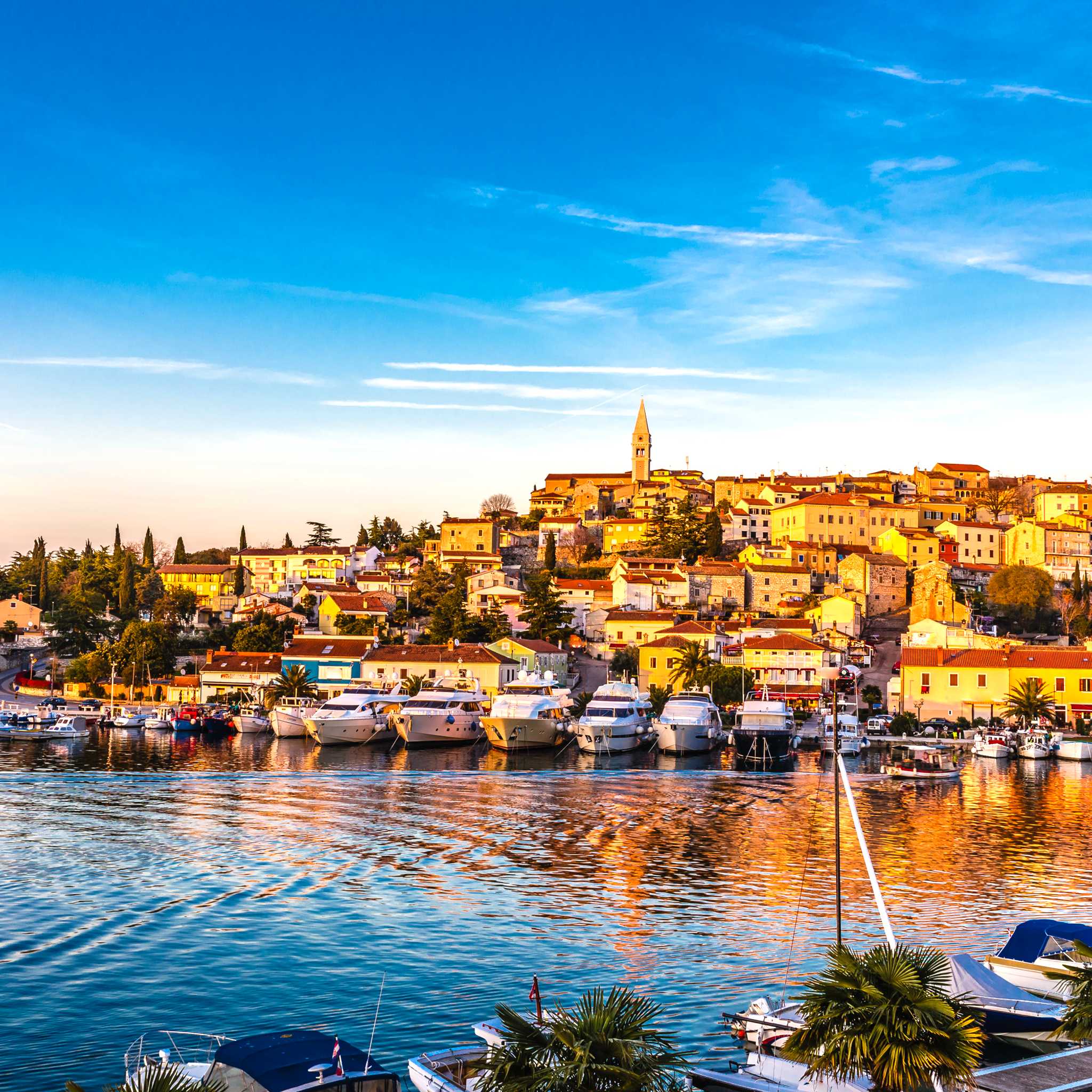
Vrsar overlooks the Lim Fjord and a harbor scattered with small islets, giving the area a different character from Istria's larger coastal towns. The town also holds its Casanovafest, an annual event marking Giacomo Casanova's 18th century visits, with performances and events through the old town; it's worth checking the current dates if you'd like to catch it. Outside of festival dates, the harbor and Lim Bay area are worth a slow look before or after exploring the walls.
Just north of the old town, this hillside park holds 26 large-scale works by Dušan Džamonja, a Croatian sculptor who considered the site his greatest artistic achievement and opened it to the public in 1981. It's a striking contrast to Vrsar's ancient core, showing modern art set against sea views, and adds meaningfully to a day trip without requiring much extra time.
Vrsar grew almost entirely inside its ancient circular walls until the 19th century, so the old town reads like a timeline rather than a museum. The 13th century town gate is still the main entrance, and behind the 12th century Romanesque Basilica of St. Mary sit the excavated remains of a 4th century basilica in the same walled backyard. Few Istrian towns compress that much visible history into such a short walk.