Yes, the Silfra fissure within Thingvellir is one of the few places in the world where you can snorkel or dive directly between two continents. Glacial meltwater filters through lava rock for years before reaching Silfra, giving it visibility that can exceed 100 meters, among the clearest water anywhere. It typically requires a separate booked activity with a specialized operator, so plan ahead if it is a priority for your day.
Thingvellir is typically the first stop on the Golden Circle, followed by the Geysir geothermal area and Gullfoss waterfall, covering roughly 300 km (186 miles) round trip from Reykjavik. Visiting all three in one day gives you tectonic rifts, erupting geysers, and a powerful waterfall without needing an overnight stay. A private driver can sequence the stops efficiently and adjust timing so you get unhurried time at each one.
Thingvellir sits about 45 km (28 miles) from Reykjavik, roughly a 45 minute to 1 hour drive. A private transfer takes you straight to the park entrance on a schedule built around your day, so you are not tied to a rigid bus timetable or navigating rental car logistics on unfamiliar roads.
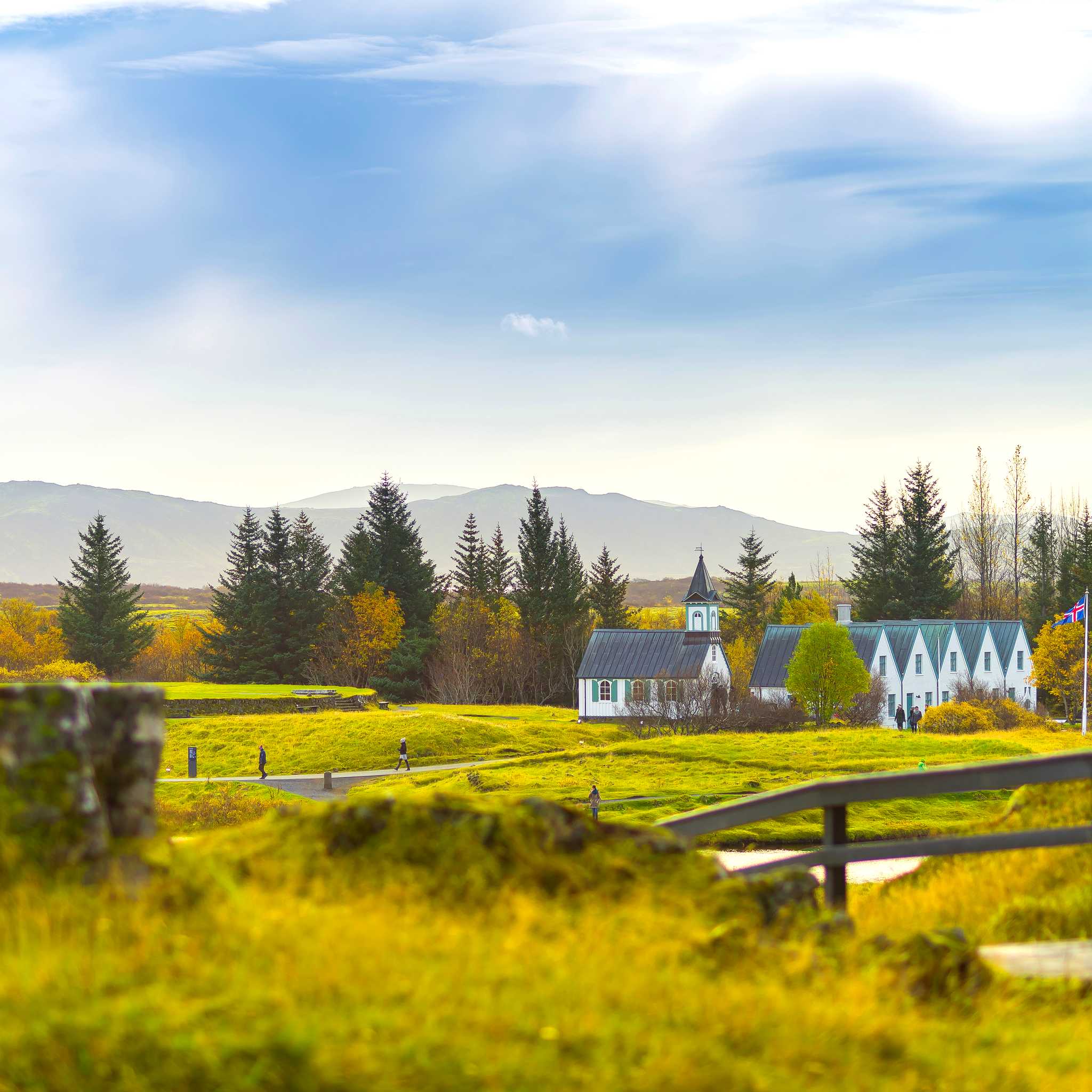
Most travelers spend 1 to 2 hours exploring the highlights: the walk through Almannagja Gorge, the view from Hakid viewpoint, Law Rock, and Oxarafoss waterfall. The main paths are well marked and easy walking, so you can see everything that matters without rushing. This makes Thingvellir easy to pair with the other Golden Circle stops in a single day.
Thingvellir was the site of the Althing, founded in 930 AD and considered the world's oldest parliament. Icelandic chieftains gathered here every summer for centuries to settle disputes and pass laws, right on the rift where the plates meet. Walking the same ground where Iceland's governance began adds a layer of history to the natural scenery.
Thingvellir is one of the few places on Earth where you can walk directly between two tectonic plates. The Almannagja Gorge marks the boundary where the North American and Eurasian plates are slowly pulling apart, creating dramatic rock walls on either side of the path. Add UNESCO World Heritage status, the Oxararfoss waterfall, and Iceland's largest natural lake, and you get a rare combination of geology and scenery in one compact park.