每位乘客可以携带一件大行李(29" x 21" x 11" / 74 x 53 x 28 cm)和一件小行李(22" x 14" x 9" / 56 x 36 x 23 cm)。豪华轿车最多可容纳 2 件大行李。我们始终会为您安排最合适的车辆,以确保您的行李能够容纳。如有超大行李,或您不确定行李是否能放下,请 联系我们。
Terezin is located approximately 60 km (37 miles) north of Prague, roughly an hour's drive depending on traffic. A private transfer is the most straightforward way to make the journey — your driver brings you directly to the site and collects you when you are ready to leave, with no need to navigate public transport connections or manage return schedules on a day that may leave you emotionally drained. Daytrip drivers are familiar with the route and can be scheduled to allow you as much time at the memorial as you need.
A thorough visit to the full memorial complex typically takes 4 to 6 hours. The site is divided into two main areas: the Small Fortress, which served as a Gestapo prison and where you can walk through isolation cells and common rooms, and the Large Fortress, where the ghetto itself was located and where streets, barracks, and the Magdeburg Museum can be explored. Allowing time to visit both areas, as well as the Jewish and Christian cemeteries, is worthwhile. Most visitors who come from Prague make a full day of it.
Terezin is suitable for older children and teenagers, particularly those studying this period of history. The site presents its subject matter with dignity and historical care rather than sensationalism, but the content — isolation cells, deportation records, memorial spaces — is sobering and can be distressing for younger or more sensitive children. Parents should prepare children in advance by discussing the historical context. For many families, a guided visit provides structure and helps frame the experience appropriately for younger visitors.
Both options are viable, and the right choice depends on your preference. The memorial complex provides informational materials and the site itself is well-documented with on-site exhibits, so independent visitors can engage meaningfully with the history without a guide. That said, a guided tour — whether arranged through the memorial or through a local guide — can provide deeper historical context and help visitors navigate the emotional weight of the experience. Whichever approach you choose, arriving with some prior knowledge of the site's history makes the visit considerably more meaningful.
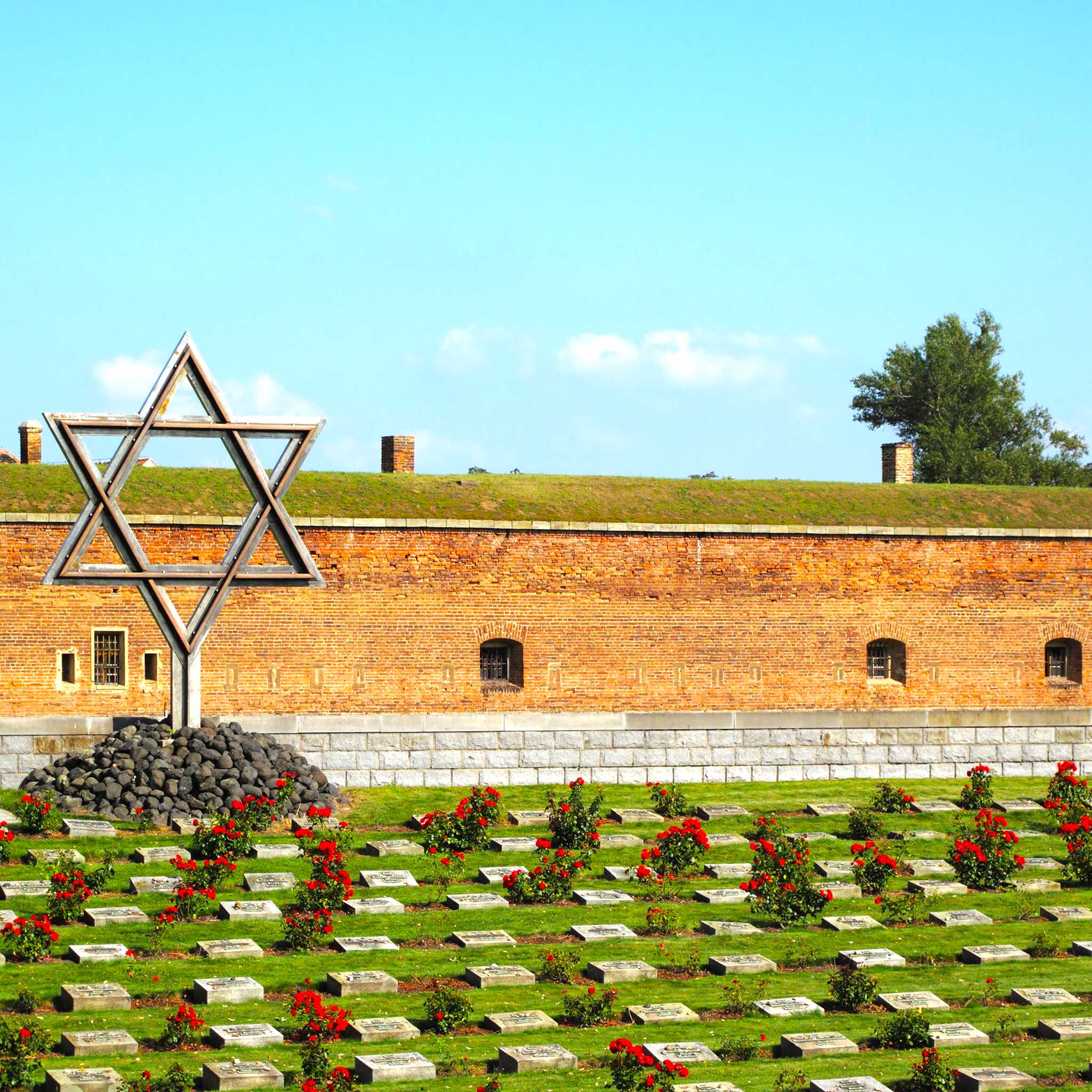
Terezin (Theresienstadt) is a former Nazi Gestapo prison and ghetto in the Czech Republic, approximately 60 km (37 miles) north of Prague. Between 1940 and 1945, it served as a transit and concentration camp where 35,000 people died from malnutrition, overcrowding, and brutality, and from which 88,000 were deported to Auschwitz. Today it stands as one of Central Europe's most significant Holocaust memorial complexes, preserving the original structures, cells, and streets of the ghetto largely intact. People visit to bear witness, to learn, and to honor the memory of those who suffered here.
The Small Fortress functioned as a Gestapo political prison, primarily holding resistance fighters and political prisoners. Visitors can walk through the cramped isolation cells, the common rooms used for women prisoners, and the prison courtyard. The Large Fortress was the ghetto itself — an entire garrison town repurposed to confine Czech Jewish men, women, and children. Inside its walls you can walk the original streets, visit the Magdeburg barracks where cultural and community life was documented, and reach the cemeteries. Both areas are essential to understanding the full history of Terezin, and most visitors explore both during a single day trip.