Yes. Marked trails let you explore this UNESCO-listed reserve, one of the most biodiverse arid zones in North America, home to a remarkable share of the world's plant families, many endemic and endangered. A private transfer gives you the flexibility to pick a trail, spend as long as you like among the cacti and rock formations, and still fit in the rest of Tehuacán's sights the same day.
Tehuacán is about 120 km (75 miles) from Puebla city and around 250 km (155 miles) from Mexico City. Buses and shared vans run the route but typically involve fixed schedules and station transfers. A private transfer covers the same distance door to door, so you arrive ready to start sightseeing rather than waiting on public transport.
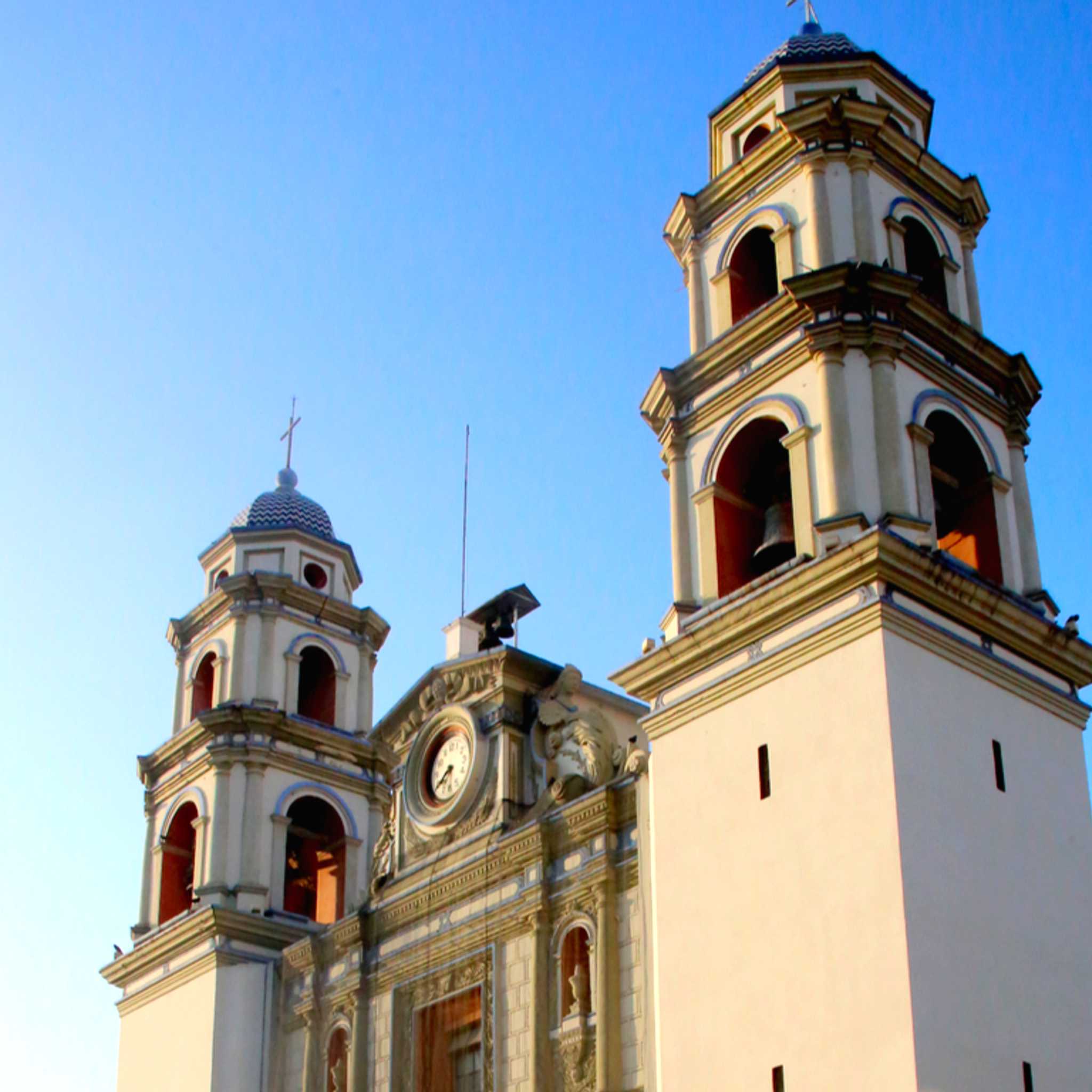
The standout is the 16th century Ex-Convent of San Francisco, one of the oldest colonial buildings in the region and a window into Tehuacán's Spanish-founded history. The Museum of Mineralogy is also worth a stop, fitting for a state long known for its mineral water springs. Both sit close enough together to cover on foot in an hour or two.
This garden protects one of the most striking landscapes in the biosphere reserve: forests of giant columnar cacti, some towering several metres high. Named for the Mexican botanist who first studied the region's flora, it's the easiest way to see the reserve's signature plant life up close without a long hike. Plan on an hour or so to wander the paths and take photos among the cacti.
Tehuacán packs 6,000 years of history into a single desert city. Its roots reach back to roughly 4000 BC, when nearby communities were among the first anywhere to domesticate maize and make pottery. Surrounding it is the UNESCO-listed Tehuacán-Cuicatlán Biosphere Reserve, widely regarded as one of the most biodiverse arid zones in North America. Add a colonial-era convent, a mineralogy museum, and Puebla state's mineral spring heritage, and you get a day trip that mixes deep history with landscapes found nowhere else.
The archaeological zone sits where some of the earliest evidence of maize domestication and pottery-making in the Americas was uncovered, dating back to around 4000 BC. Excavated tools, ceramics, and plant remains from that era are displayed in the onsite museum, giving context before or after you walk the site. It's a rare chance to stand where farming as we know it may have begun.