Yes. The Suramadu Bridge, one of Indonesia's longest at roughly 5.4 km (3.4 miles), connects Surabaya directly to Madura Island across the strait. With a private transfer, crossing over for a few hours is a simple way to extend your day and see a different side of East Java before heading back to the city.
Yes. The Arab Quarter around Ampel and the nearby Chinatown district sit close together and are easy to combine with the city's colonial landmarks. Both areas are packed with older buildings and a street life that reflects Surabaya's mix of trading communities, giving a fuller picture of the city than the main monuments alone.
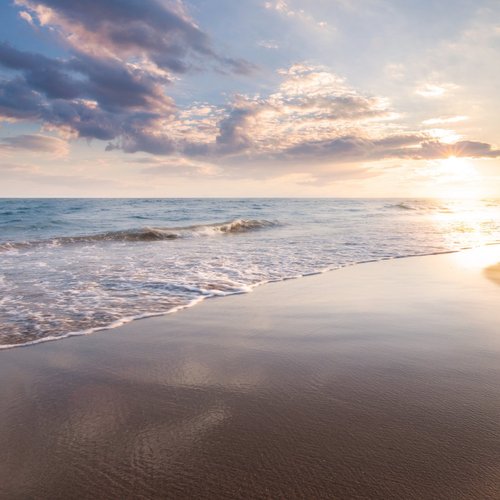
A full day is the right amount of time to see Surabaya properly. That's enough to cover the House of Sampoerna, the Majapahit Hotel, Cheng Hoo Mosque, and the Submarine Monument, with time left for a relaxed stop at Ria Kenjeran Beach. A private transfer lets you set your own order and pace rather than rushing between fixed stops.
Not really. Mount Bromo is roughly 100 km (62 miles) from Surabaya, but mountain roads make it a 3 to 4 hour drive each way, and most visitors go overnight to catch sunrise at the crater rim. It's a rewarding trip on its own, but it doesn't fit alongside a day of sightseeing in Surabaya itself. If Bromo is on your list, plan it as a separate excursion rather than an extra stop.
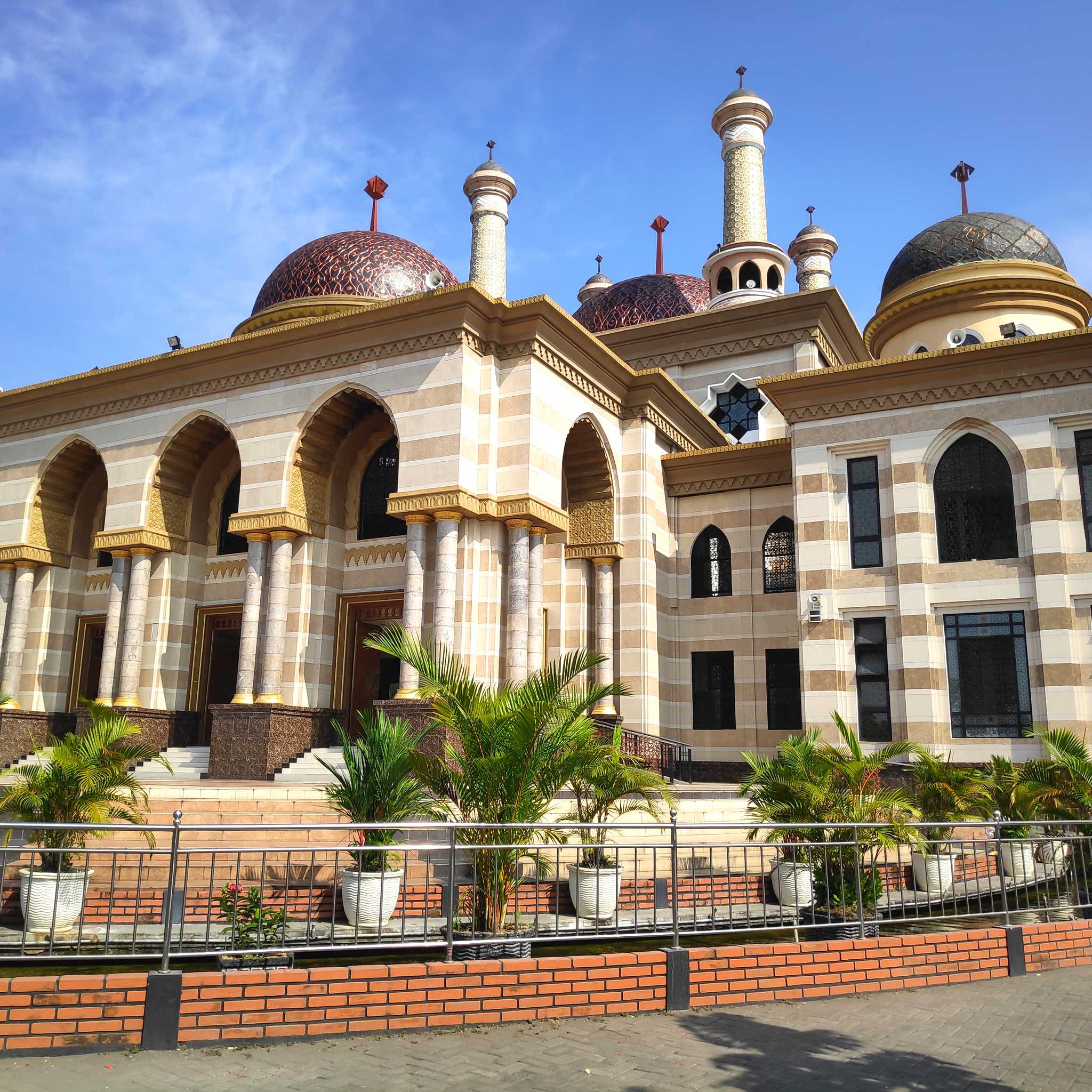
Start at the House of Sampoerna to learn the story behind Indonesia's clove cigarette industry, then walk the garden grounds of the Majapahit Hotel, a colonial landmark dating to 1910. The Cheng Hoo Mosque, with its pagoda-style roof, reflects the city's long-established Chinese community, while the Submarine Monument lets you tour an actual Indonesian navy vessel docked in the harbor. Round things out with sea views at Ria Kenjeran Beach.
Surabaya is Indonesia's second-largest city and a working port with real history behind it, not a manufactured tourist stop. Its name comes from a legend of a battle between a shark and a crocodile, memorialized by a statue at the city zoo, and its nickname, City of Heroes, honors the 1945 Battle of Surabaya during Indonesia's independence struggle. Add in colonial architecture, a mosque blending Chinese and Islamic design, and a decommissioned navy submarine you can climb inside, and it's a day packed with variety few other Java stops can match.