Yes. Ston sits about 20 km (12 miles) from Slano, roughly a 20-minute drive. Its defensive walls stretch around 5.5 km (3.4 miles) along the hillside, among the longest in Europe, and the adjoining salt pans have been worked the same way, using sun, wind, and sea, for centuries. An hour or two is enough to walk the walls and see the salt fields up close.
The Elaphiti Islands, Kolocep, Lopud, and Sipan, sit just offshore and are usually reached by a short ferry from Dubrovnik's port rather than directly from Slano. If island time is on your list, it's worth building your transfer schedule around a ferry departure so you can combine both in one day.
Slano itself is a 30 to 45 minute stop, enough for a walk along the harbour and bay. Add Ston's walls and salt pans and it becomes a half-day outing; work in a Peljesac wine tasting and you have a full day from Dubrovnik. Most travelers treat Slano as a scenic waypoint rather than a standalone destination.
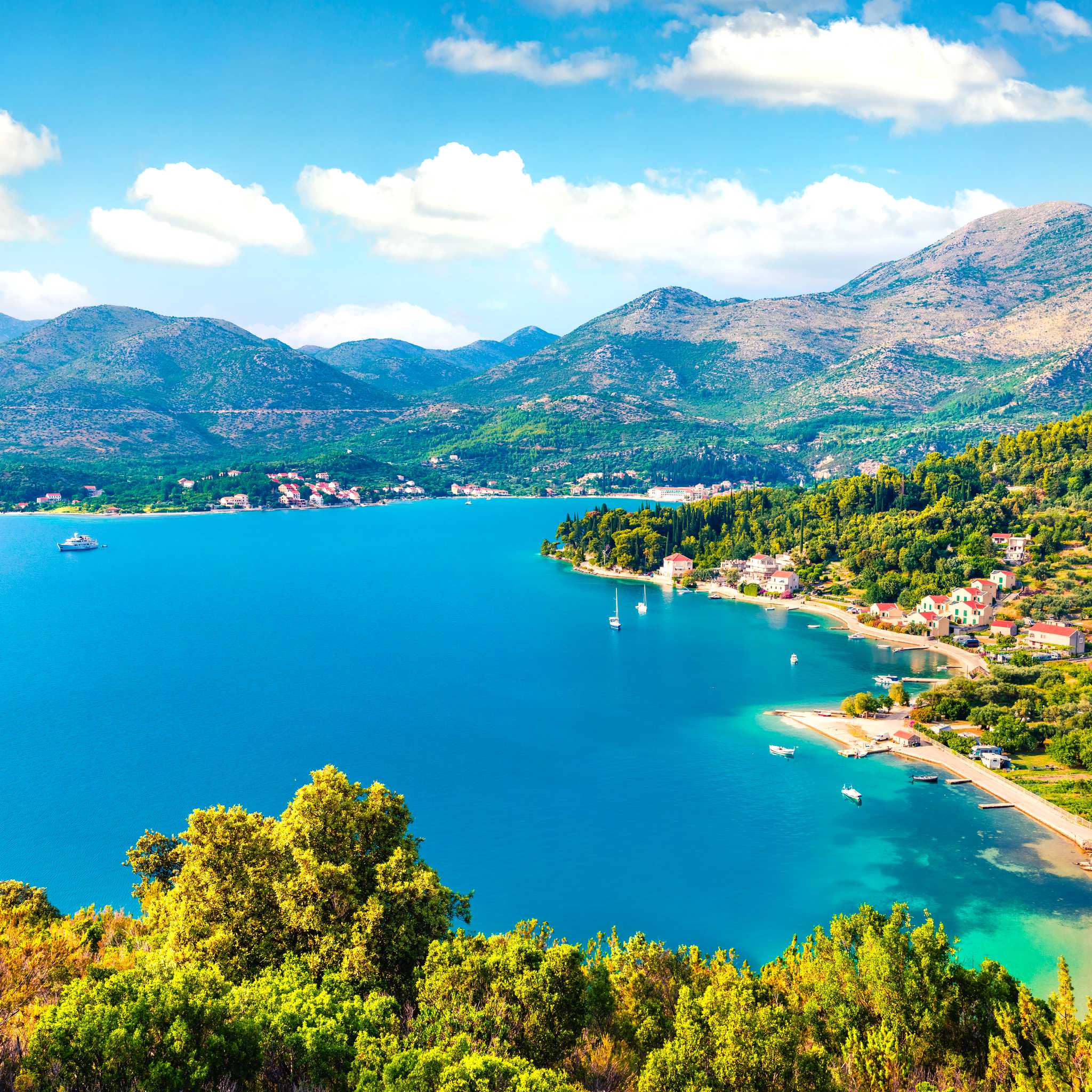
Slano is a quiet fishing village tucked into a sheltered bay about 27 km (17 miles) northwest of Dubrovnik. Roman ruins and a fortress wall recall its centuries as a summer retreat for Dubrovnik's nobility, while its small harbour and pebble beaches make for an easy, uncrowded coastal pause. The bay setting also puts you within easy reach of Ston, the Elaphiti Islands, and Peljesac wine country.
Just beyond Ston, the Peljesac peninsula produces some of Croatia's most prized reds, Dingac and Postup, grown on steep vineyard slopes above the Adriatic. Wineries around Potomje pair tastings with local oysters and seafood. For travelers already heading toward Ston, it's a natural add-on rather than a separate trip.
The coastal road hugs the Adriatic the entire way, with Slano about 27 km (17 miles) from Dubrovnik and a longer, scenic run from Split via the Peljesac Bridge. A private transfer means you can pull over for the bay views, detour into Ston, or add a wine stop on your own timing, instead of working around a fixed bus schedule.