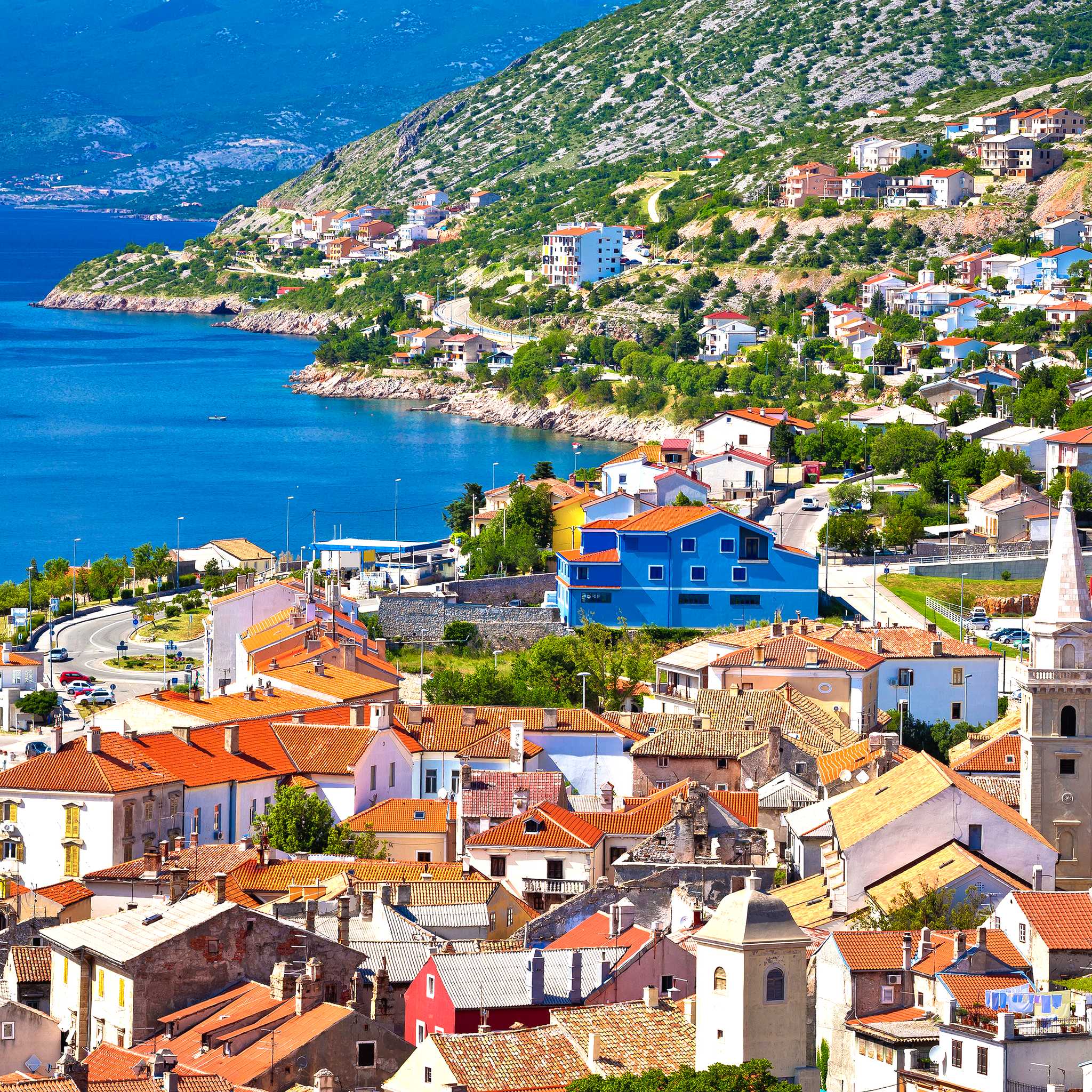
Yes. Senj sits between the coast and inland Croatia, making it a natural stop-off rather than a standalone destination. Many travelers pair it with a scenic coastal route to or from Plitvice Lakes, Krk, or Rijeka, using Senj as a history and photo stop along the way. Since Daytrip lets you add stops to your route, Senj fits easily into a bigger itinerary without needing its own separate day.
Senj sits roughly midway along the northern Adriatic coast. Rijeka is about 66 km (41 miles) away, Krk town around 71 km (44 miles) via the Krk Bridge, Plitvice Lakes roughly 75-90 km (47-56 miles) depending on the route, and Zagreb about 163 km (101 miles). A private transfer takes on the winding coastal road and mountain passes for you, so the drive itself becomes part of the sightseeing rather than a chore.
Two to three hours covers the essentials: the Nehaj Fortress museum, the old town core, and a walk along the waterfront. That makes Senj an easy half-day stop, leaving plenty of time to continue on to Plitvice Lakes, Krk, or Rijeka the same day.
Senj's old town packs history into a compact, walkable core. Stroll the stone streets down to the seafront promenade, then climb to the hilltop Nehaj Fortress for sweeping views over the Adriatic and Kvarner islands. Along the way you'll pass the remains of a Roman aqueduct and temples once dedicated to Roman gods, still standing after two thousand years. Few Adriatic towns pack Roman, Uskok, and Venetian history into so short a walk.
Built in 1558 by the Uskoks, Senj's pirate-warrior defenders, Nehaj Fortress is best known today for one unusual detail: a latrine that juts out over the fortress wall, suspended high above the town. Beyond the novelty, the museum inside displays Uskok weapons and clothing, and the ramparts offer some of the best views over Senj and the Adriatic. It's a quick stop, but one of the town's most memorable.
Senj sits directly in the path of the Bura, a powerful cold wind that funnels down from the Velebit mountains and can reach extreme speeds. It has shaped local life and even the town's stone architecture for centuries. Most days it's simply a brisk, refreshing coastal breeze, but on stronger days outdoor sightseeing may feel more limited. Either way, it's part of what makes Senj feel unlike anywhere else on the Adriatic.