It's about 47 km (29 miles) from Logroño, roughly a 40 to 45 minute drive depending on traffic, and sits right at the edge of Rioja wine country. That makes it easy to combine with a winery visit or a stop in another Rioja town as part of the same private transfer, rather than choosing between the two.
Saint Dominic de la Calzada built a bridge, a hospital, and a pilgrim hostel here specifically to help travelers on the French Route to Santiago de Compostela, and the town grew up around that mission. He's buried inside the cathedral he helped found. Walking the old quarter today, you're tracing the same path pilgrims have used for centuries, making it a meaningful stop even for travelers who aren't walking the full Camino.
A couple of hours is enough to see the cathedral, meet the resident rooster and hen, and walk the old quarter at an easy pace. Because it's compact, it works well as one stop on a longer day rather than a full-day destination on its own, especially when paired with a Rioja wine stop or another nearby town along the same route.
According to a medieval story, a young pilgrim was wrongly accused of theft and hanged, only for his parents to find him alive on their return from Santiago de Compostela. When they told the local magistrate, he scoffed that their son was as alive as the roasted rooster on his dinner plate — at which point the bird stood up and crowed. In tribute, a live rooster and hen are kept inside the cathedral to this day, one of the more unusual sights you'll find in any European church.
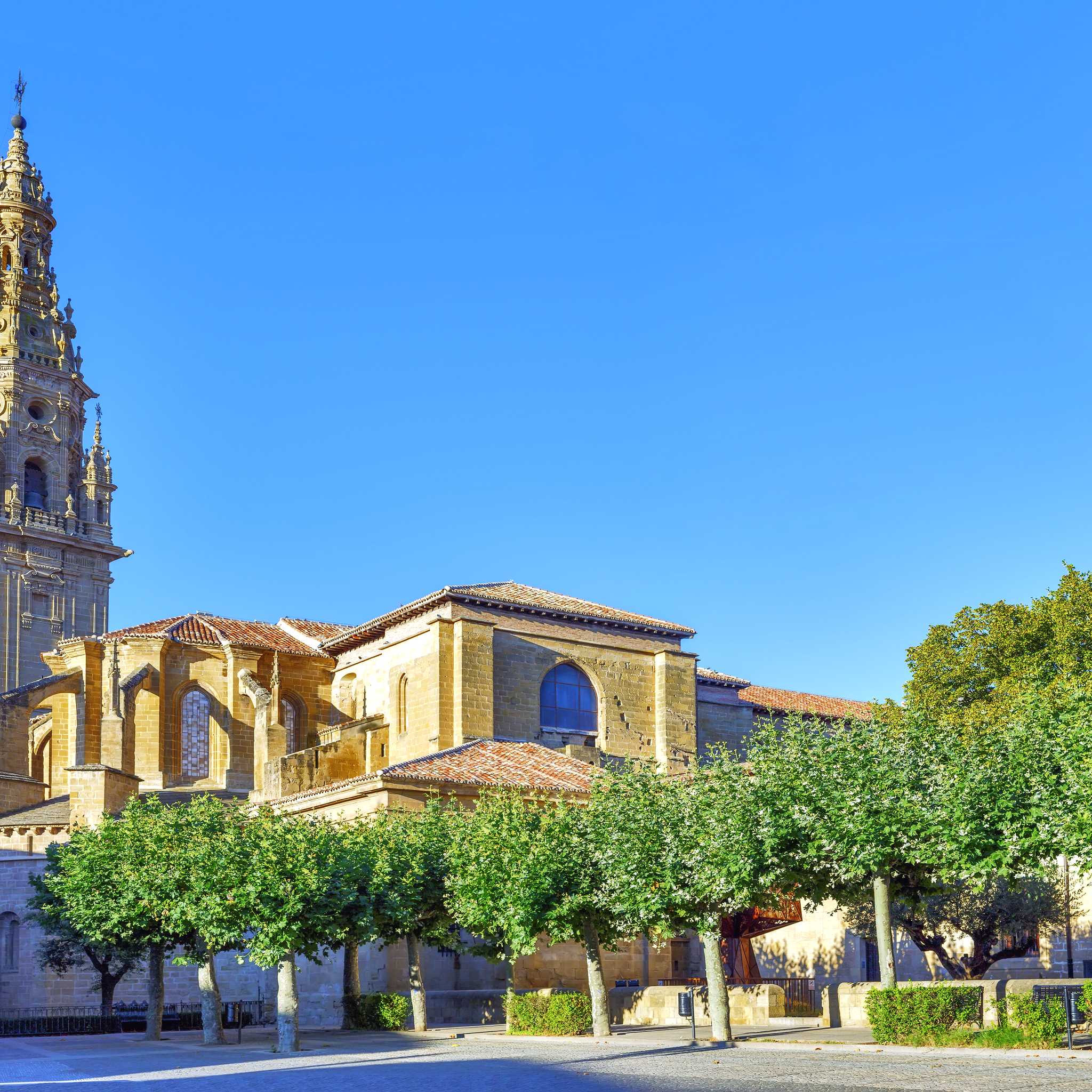
The partially walled medieval quarter is compact and walkable, with narrow stone streets, old pilgrim hostels, and facades that have changed little over the centuries. Many residents still live within the old walls, so it feels lived-in rather than preserved as a museum piece. The cathedral anchors the quarter and is the natural starting point before wandering the surrounding lanes.
This La Rioja town packs an unusual mix into a small footprint: a soaring Gothic cathedral, a legend involving a rooster and a hen still kept as living residents, and a partially walled medieval quarter where locals still go about daily life. It sits on the French Route of the Camino de Santiago, giving it a pilgrim history you can feel in the stone streets. Pair it with a stop in the nearby Rioja wine region and you get a full day of history and landscape without an overnight stay.