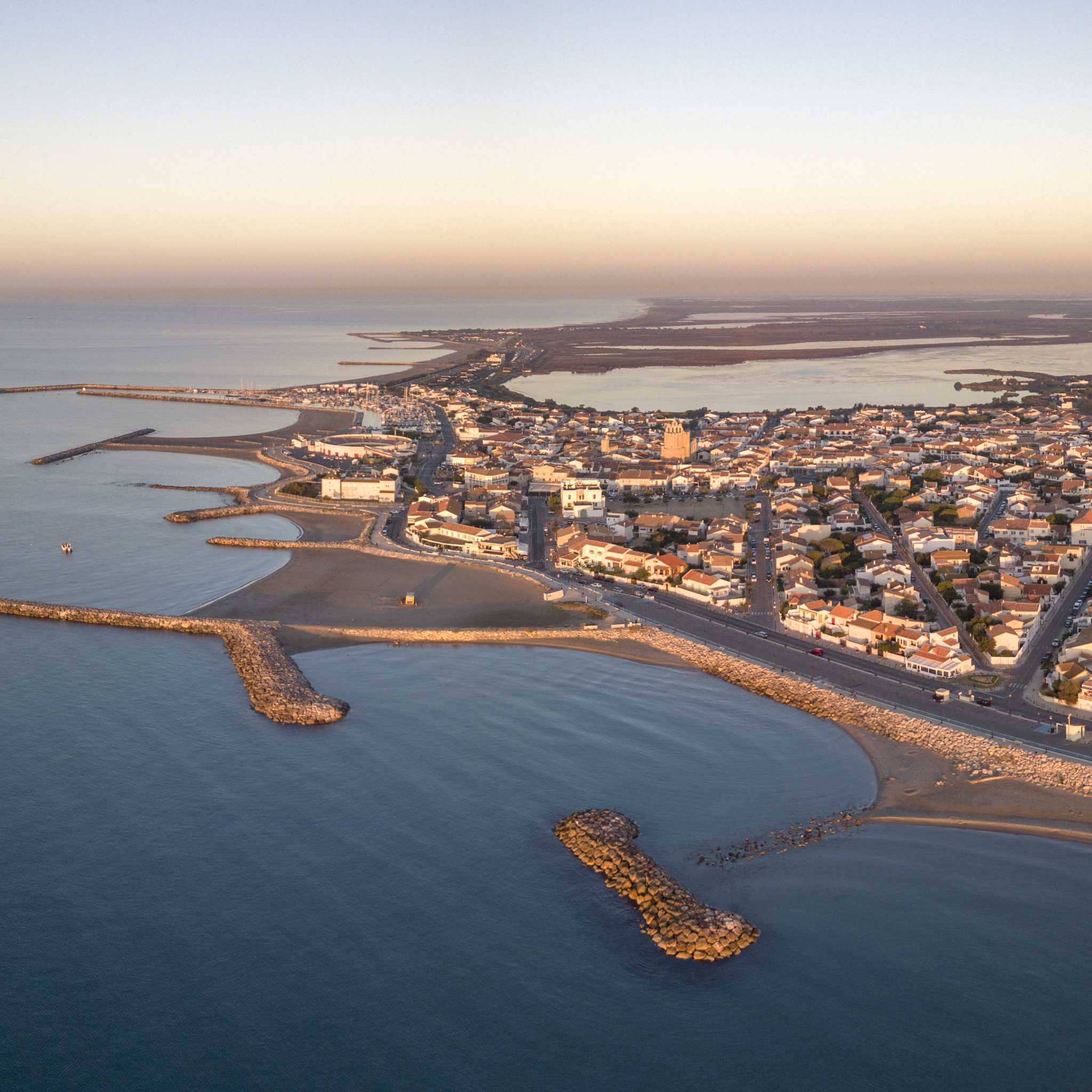
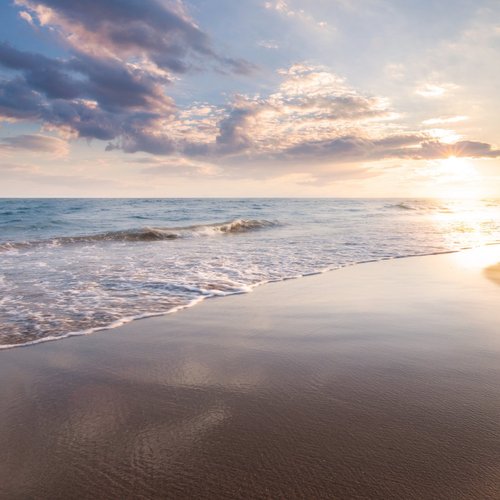
Yes, the town has long, flat sandy beaches along the Mediterranean, backed by dunes and with more open space than many resort towns nearby. Because the beach sits right next to the town center and the wetlands, it's easy to combine sea, sightseeing, and nature in a single visit.
Saintes-Maries-de-la-Mer sits about 40 km (25 miles) from Arles and roughly 130 km (81 miles) from Marseille, but there's no direct train line into town, so public transport usually means a bus connection partway through the Camargue. A private transfer skips that connection, dropping you directly in town with the option to add a stop at a manade or salt pan along the way. That flexibility matters here, since much of the Camargue's appeal lies in the landscape between towns, not just inside them.
A half day covers the town center, the fortified church, and a stretch of beach. A full day leaves room to add a Camargue excursion, such as a horseback ride or boat trip through the marshes to spot flamingos and wild horses. Since the wetlands sit just outside town, most visitors combine the two.
Notre-Dame-de-la-Mer is a Romanesque church built like a small fortress, with a rooftop walkway that once served as a lookout against pirate raids and now offers coastal views. Its crypt holds the relics of Saint Sara, honored each May when Roma and Gitan communities travel to Saintes-Maries-de-la-Mer for a pilgrimage centered on her veneration. Outside the pilgrimage dates, the church is generally open to visitors as a quiet, striking landmark.
Saintes-Maries-de-la-Mer is the capital of the Camargue, a wetland region in Provence where white horses roam salt marshes and pink flamingos gather in shallow lagoons. The town centers on a fortified Romanesque church built to double as a watchtower, with sandy beaches just steps away. It's a rare combination of coastal town, wildlife habitat, and living cowboy culture in one stop.
The surrounding marshes are home to pink flamingos, semi-wild white Camargue horses, and black bulls raised on traditional ranches called manades. Boat tours, horseback rides, and short trails through the nature reserve put you close to all three. Birdwatchers also come for the herons, egrets, and migratory species that pass through the Rhône delta.