The glowing plankton Rincón del Mar is known for is only visible after dark, so it isn't part of a standard daytime visit that returns to Cartagena before evening. Because a private transfer isn't tied to a fixed schedule, you can choose to stay into the evening to see the bioluminescence and head back afterward, rather than being locked into a bus or shared-tour departure time.
Yes. Rincón del Mar is the main departure point for the San Bernardo Islands, a separate archipelago from the better-known Islas del Rosario near Cartagena. Local boats head to Isla Palma, about 25 minutes offshore and known for clear water and snorkeling, or Isla Múcura, roughly 40 minutes out, home to one of the archipelago's few fishing villages. Boats are arranged locally on the beach or through your hotel once you arrive.
Rincón del Mar sits about 120 km (75 miles) south of Cartagena. A private transfer takes roughly 2 to 2.5 hours depending on traffic and road conditions, with the final stretch running along a quieter coastal road. Since there's no airport or train service nearby, a direct private transfer avoids the multiple bus changes that public transport to this area usually requires.
A full day works well: enough time to walk the village, settle into a beachfront hammock, and still fit in a boat excursion to the islands before heading back. The village itself is small and easy to see in an hour or two, so most of the day is better spent on the water or the sand rather than sightseeing.
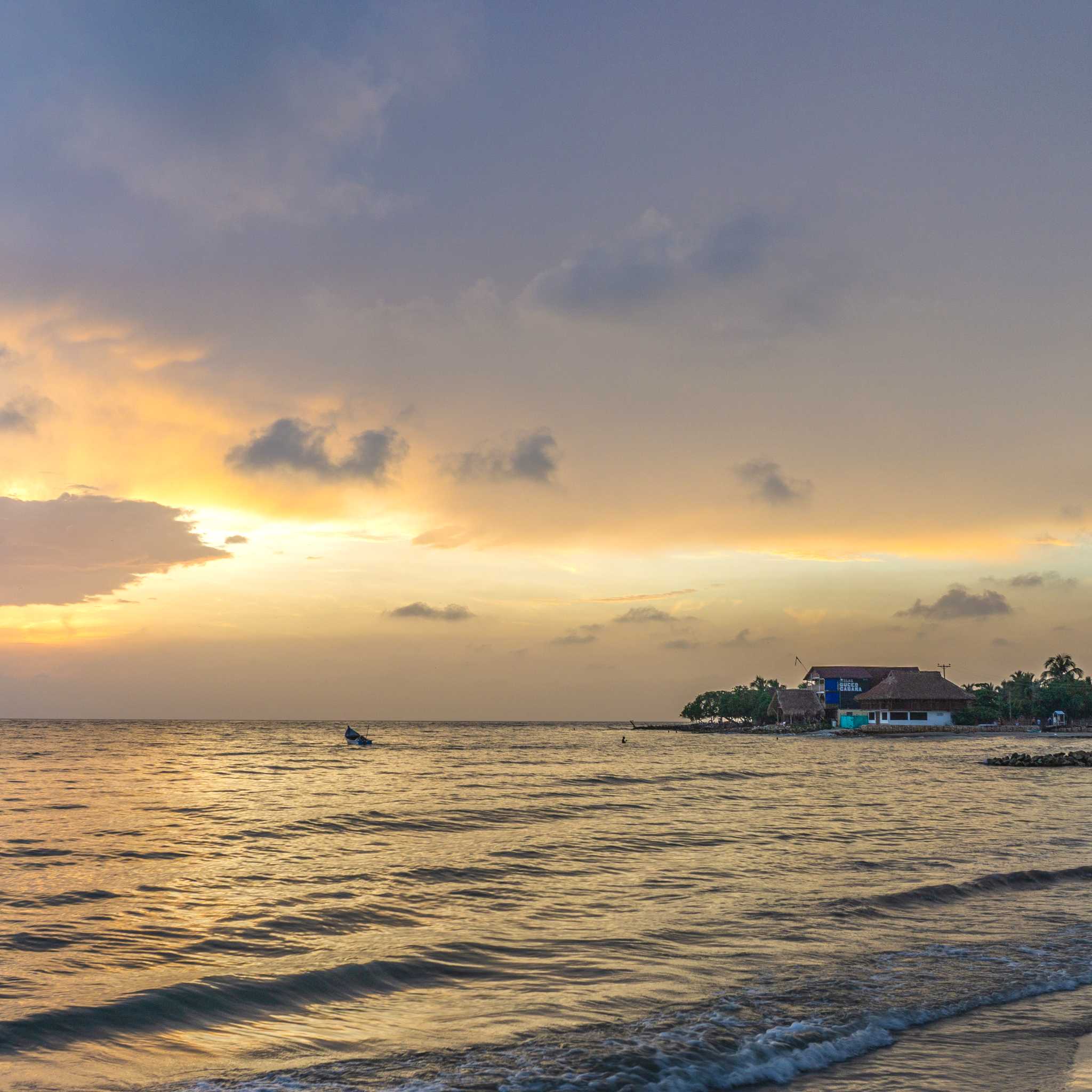
Rincón del Mar is a small fishing village on Colombia's Caribbean coast, far removed from Cartagena's crowds and cruise-ship traffic. Expect quiet, palm-backed beaches, colorful wooden fishing boats pulled up on the sand, and a slower pace built around hammocks rather than resorts. It's also the easiest launch point on this stretch of coast for boat trips to the San Bernardo Islands, making it a natural pairing of beach town and island excursion in a single day.
Expect simple, fresh seafood: whole fried fish, coconut rice, and patacones served at open-air beach shacks run by local families. The village runs on fishing, so the catch of the day is usually only a few hours old. It's a low-key contrast to Cartagena's restaurant scene, built around plastic chairs in the sand rather than formal dining.