Yes. Its central location makes it a natural stopping point on routes between larger Sicilian destinations, such as between Catania or Syracuse and Agrigento or Palermo. Since a private transfer travels point to point on your schedule, you can add the villa and town as a scenic stop along the way rather than treating it as a standalone trip, getting more out of a single day on the road.
Piazza Armerina sits inland in central Sicily, roughly 90 km (56 miles) from Catania and about 165 km (103 miles) from Palermo. The town has no direct rail link, so getting there by public transport usually means multiple bus connections and long waits between them. A private transfer takes you straight from your hotel or port to the villa and town, turning what could be most of a day of logistics into a manageable few hours each way.
Most visitors spend around 2 to 3 hours moving through the villa's mosaic-covered rooms and walkways, plus another hour or so in Piazza Armerina's old town to see the cathedral and castle exterior. Half a day covers both comfortably without feeling rushed, making this an easy single day trip from cities across Sicily.
The old town is compact but hilly, with narrow winding lanes best explored at a relaxed pace. Villa Romana del Casale sits a short distance outside the center, so most day trippers treat it as a separate stop rather than part of the town walk. Comfortable shoes are recommended given the cobblestones and slopes.
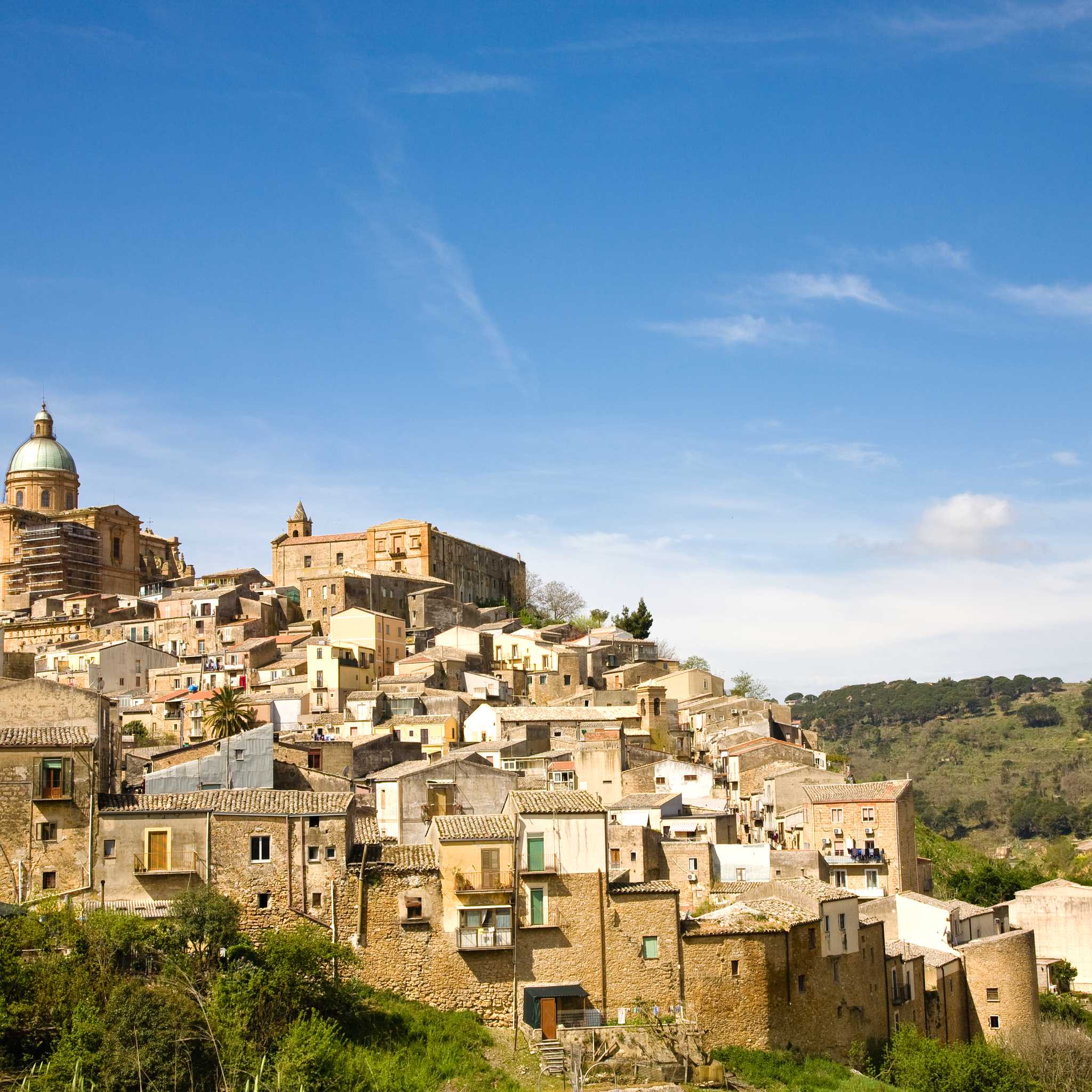
Yes. The historic center is a maze of narrow medieval streets worth exploring on foot. The 17th century cathedral stands out for its elegant white and blue interior, home to two silver reliquaries and a marble and lapis lazuli altar said to have been a gift from Pope Nicholas II, alongside a 15th century belltower left over from an earlier church. A 14th century Aragonese castle also looms over the town, an imposing sight from outside even though its interior is closed to visitors.
Villa Romana del Casale is a UNESCO World Heritage Site just outside Piazza Armerina, holding the richest and best-preserved collection of Roman mosaics anywhere in the world. Built as a lavish countryside villa in the 4th century, it was buried by a landslide in the 12th century, which is exactly what kept its floors so vividly intact for over 1,500 years. Elevated walkways let you look down over dozens of rooms depicting hunting scenes, mythology, and daily Roman life, including the famous Bikini Girls mosaic showing women in athletic wear centuries ahead of its time. It is one of Sicily's most rewarding archaeological sites and the main draw for day trippers to this corner of the island.