Petropolis sits about 68 km (42 miles) north of Rio, climbing into the Serra dos Órgãos mountains. A private transfer typically takes around 1.5 to 2 hours depending on traffic leaving the city, and the drive itself is part of the appeal, with switchbacks and increasingly cool, forested views as you rise out of Rio. Going by private car means no bus transfers or schedules to chase before you even reach the sights.
Petropolis was settled in part by German immigrants, and that legacy is still visible today. The Bohemia brewery, one of Brazil's oldest, traces back to the same roots, and the city is known for its annual German-style beer and culture festival, Bauernfest, usually held in the middle of the year. It's a different flavor of the city than the imperial palaces, and it makes Petropolis feel distinct from anywhere else you'd visit near Rio. If you're timing a visit around the festival, it's worth checking the current dates.
The Palácio de Cristal is a glass-and-iron greenhouse that Princess Isabel had shipped over from France in 1884. It's small but striking, and worth a stop on foot between the Imperial Museum and the rest of downtown Petropolis since the historic center is compact and easy to cover on a short visit.
The Imperial Museum occupies Dom Pedro II's actual palace, and it's the single best reason to visit Petropolis. Inside are the emperor's original furnishings and personal effects, plus the imperial crown itself, set with diamonds and pearls. It's a rare, intact look at Brazil's only monarchy, and most visitors treat it as the anchor of their day here.
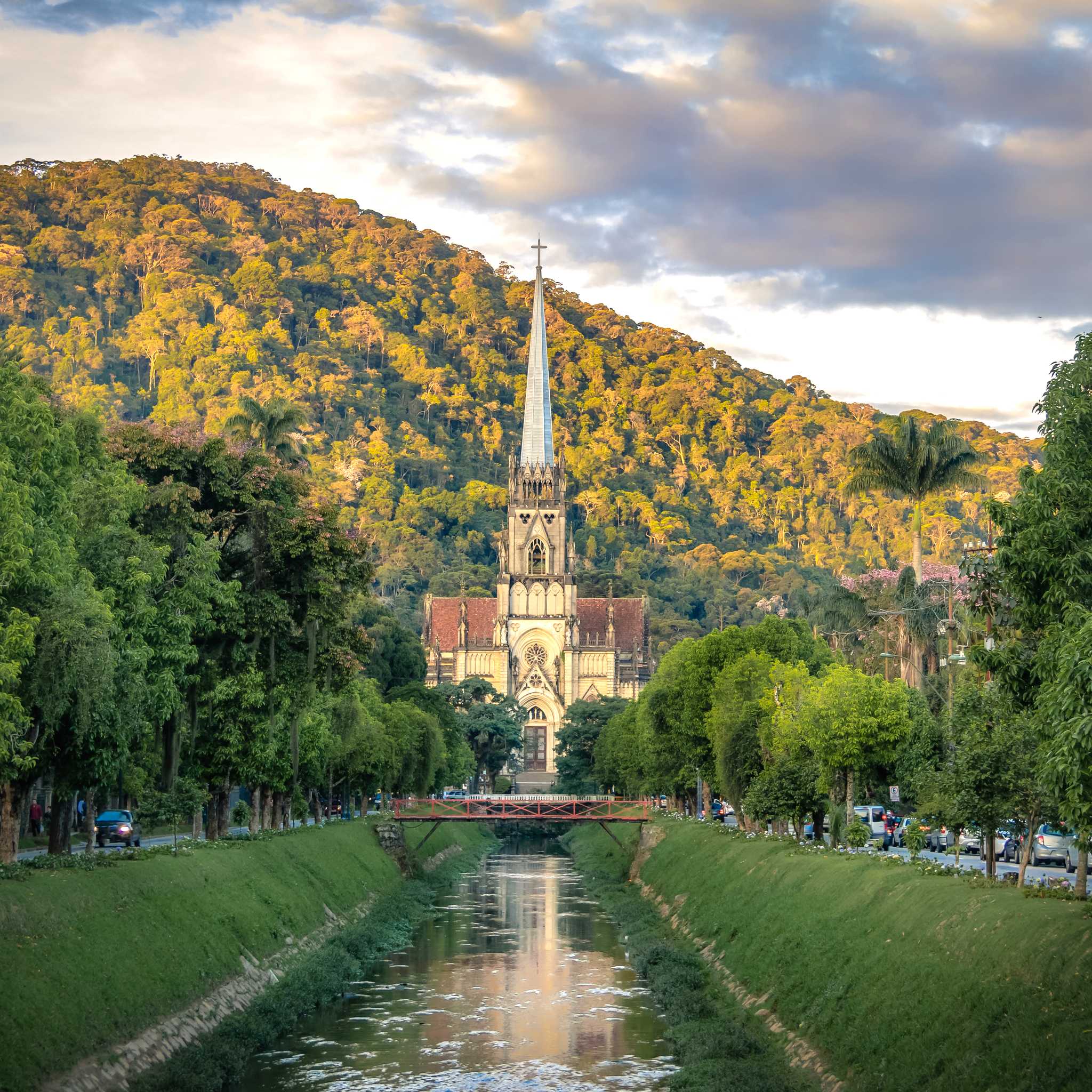
Petropolis packs an entire era of Brazilian history into one mountain town. Emperor Dom Pedro II built his summer palace here, and the aristocracy followed, leaving behind ornate mansions, museums, and a European feel found nowhere else near Rio. Add cooler mountain air and walkable historic streets, and you get a complete change of pace from the beach in under a day.
Beyond the Imperial Museum, the Rio Negro Palace shows off another side of the city's political history, while Casa de Santos Dumont, nicknamed "The Enchanted," was the quirky summer home of aviation pioneer Alberto Santos Dumont and is now a museum dedicated to him. Both sit close enough to the center that you can fold them into the same day without much backtracking.