Oribi Gorge sits about 140 km (87 miles) from Durban, roughly a 2 to 2.5 hour drive via the N2 coastal route and the inland R612. With a private driver, you can relax for the journey and go straight to the gorge without navigating unfamiliar roads or timing public transport connections.
A couple of hours covers the main viewpoints and a short forest walk, while a half day allows time for a longer trail or one of the Wild 5 activities. Because your driver waits on-site for you, you can shape the visit around what interests you most, whether that's a quiet nature walk or an adrenaline-filled stop at the gorge swing, without worrying about a fixed return schedule.
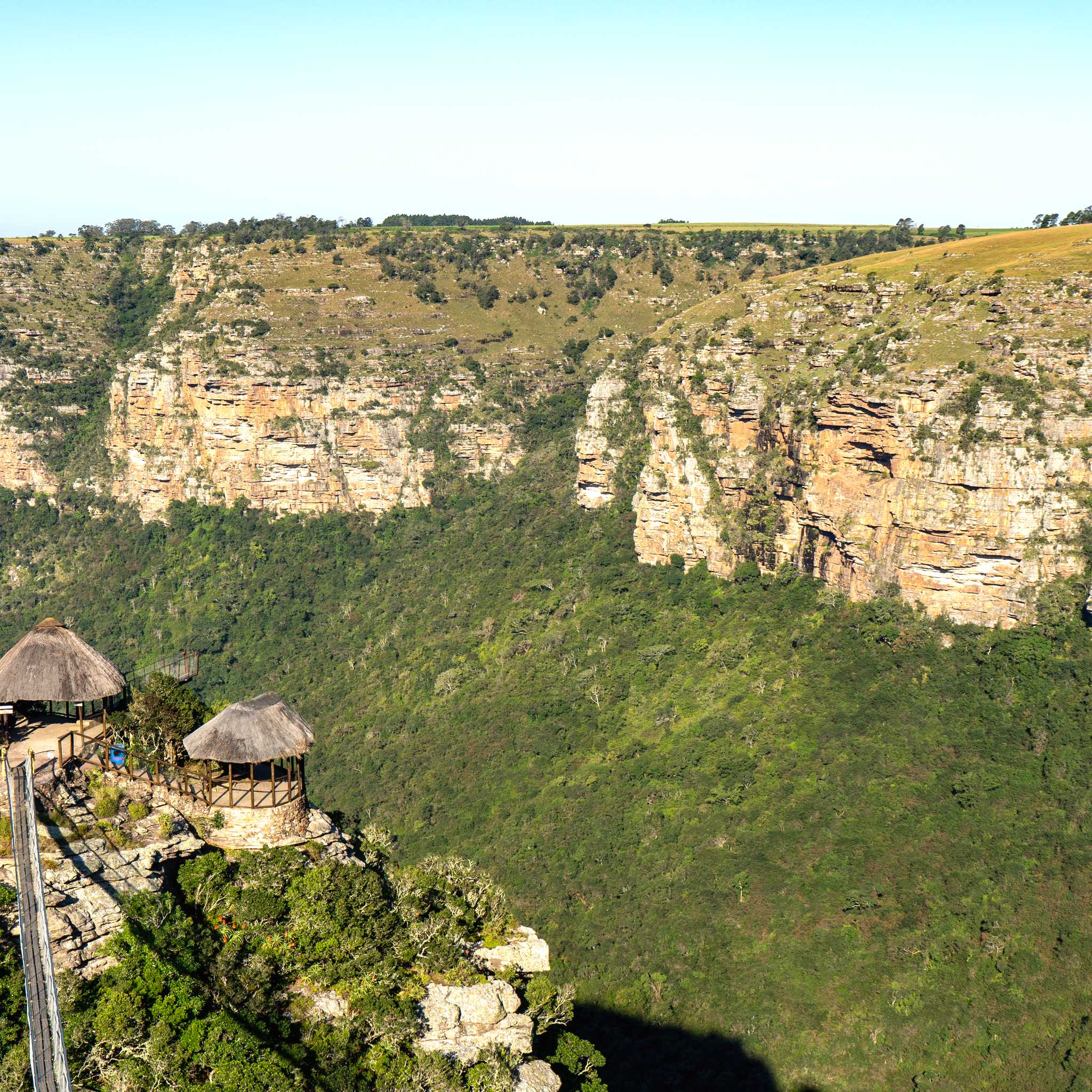
The gorge rim is home to Wild 5 Adventures, offering some of South Africa's most thrilling activities: a gorge swing dropping into the canyon from Lehr's Waterfall, a zip-line stretching across the gorge, a cliff-face abseil beside the falls, and a suspension bridge with birds-eye views over the gorge floor. These run independently of the nature reserve and can be added to your visit for an adrenaline boost.
Several short trails lead to standout viewpoints, including the well-known Samango viewpoint near the old Oribi Gorge Hotel site and lookouts over features like Leopard Rock and Baboon's Castle. The Hoopoe Falls trail leads to a waterfall with a natural pool, while other paths wind through riverine forest along the cliff edge. Most viewpoints are reachable on easy, well-marked walks suited to a day visit.
Oribi Gorge is one of KwaZulu-Natal's most dramatic natural landmarks, carved by the Umzimkulwana River into sandstone cliffs roughly 400 metres deep and nearly 5 km wide. Indigenous forest cloaks the slopes, waterfalls tumble into the canyon, and sweeping viewpoints open onto the gorge in a single afternoon visit. It's a striking change of pace from the KZN South Coast's beaches, all within easy reach for a day out.
The reserve's forest and grassland support samango monkeys, bushbuck, oribi and other small antelope, plus over 300 recorded bird species. Birders can look out for the colourful Knysna turaco and crowned eagle, while a nearby vulture hide offers close-up views of a breeding colony of rare Cape vultures. It's one of the richest wildlife pockets on the South Coast.