Yes, evidence of the 1990s conflict remains visible throughout Mostar. The Sniper Tower (destroyed building) stands as a reminder, accessible to visitors. Many buildings still bear bullet holes and war damage. Museums document the siege and bridge destruction. The rebuilt Stari Most itself represents reconciliation and recovery. While the city has healed significantly, these reminders provide sobering context for understanding Bosnia's recent history and the resilience of its people rebuilding their heritage.
Yes, Mostar's famous bridge divers (members of the traditional diving club) perform jumps from Stari Most into the Neretva River below when sufficient donations are collected from spectators. The 24-meter plunge requires skill and bravery in the cold, shallow river. Divers perform throughout the day during tourist season, with the annual diving competition in July. The tradition dates back centuries. Visitors gather on the bridge and riverbanks to watch this spectacular demonstration of courage.
Mostar sits approximately 130 kilometers (81 miles) southwest of Sarajevo through mountainous Bosnian terrain. The journey takes about 2-2.5 hours by car along scenic routes passing rivers, mountains, and traditional villages. Many travelers visit both cities exploring Bosnia's contrasts between the capital's urban energy and Mostar's Ottoman bridge town charm. The drive showcases Bosnia's dramatic natural beauty and has been significantly improved with better roads since the 1990s conflict.
Mostar's cuisine blends Turkish, Mediterranean, and Balkan influences. Must-tries include cevapi (grilled meat sausages), burek (flaky pastry with meat or cheese), dolma (stuffed vegetables), and Mostar's specialty, japrak (stuffed sour cabbage leaves). Baklava and other Turkish sweets satisfy dessert cravings. Bosnian coffee served in copper pots represents important social tradition. Riverside restaurants offer atmospheric dining with bridge views. The food reflects Ottoman heritage combined with local ingredients and preparation traditions.
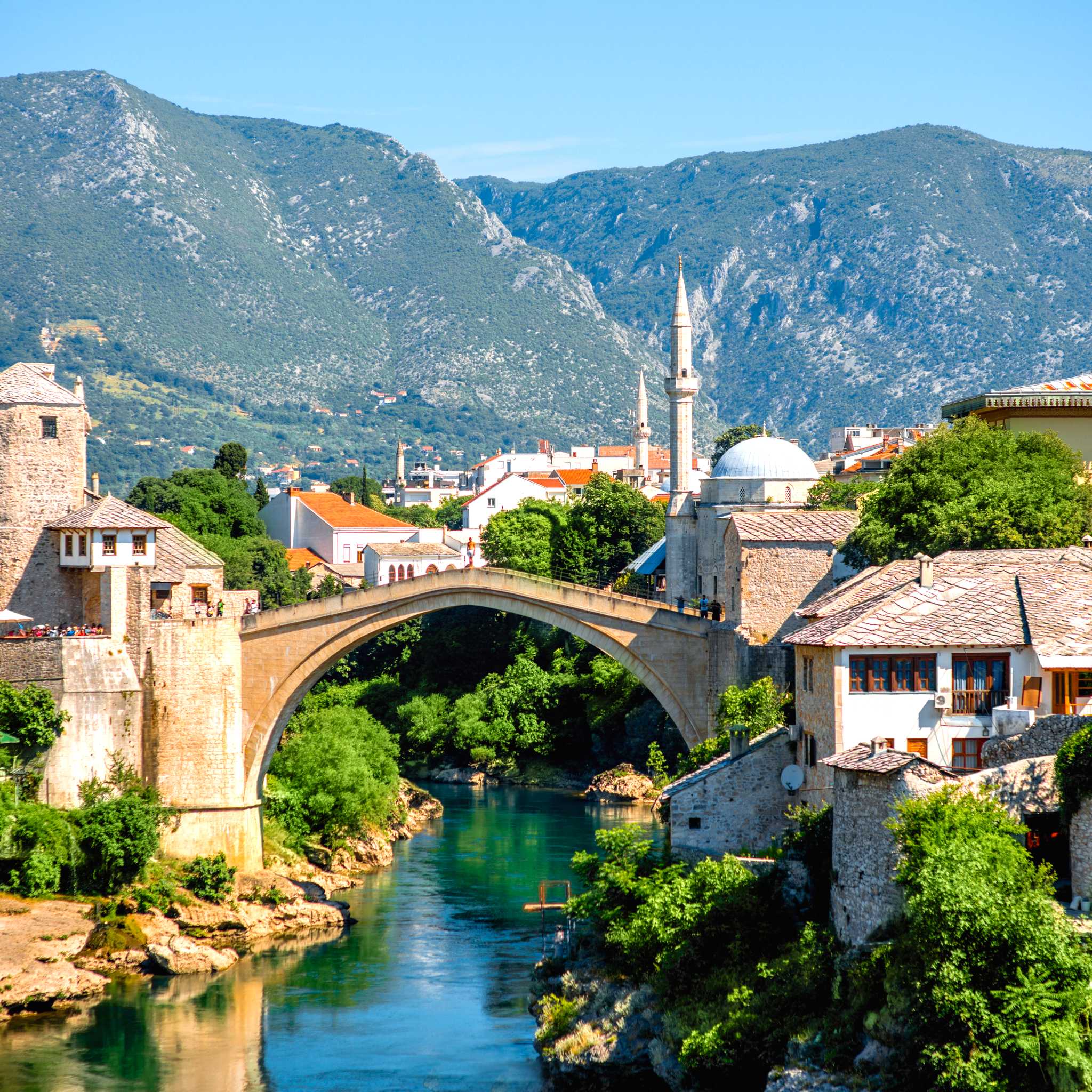
Mostar is a historic Bosnian city famous for Stari Most (Old Bridge), a stunning 16th-century Ottoman bridge spanning the Neretva River. This UNESCO World Heritage site features Ottoman-era architecture, cobblestone streets, bustling bazaar, and the tradition of bridge divers jumping 24 meters into the emerald river. Mostar combines East-meets-West culture, resilient post-war recovery, and serves as Bosnia and Herzegovina's most iconic destination representing the country's complex history and beautiful heritage.
Stari Most (Old Bridge) is Mostar's iconic 16th-century Ottoman bridge connecting the city across the Neretva River. The original bridge stood for 427 years until destroyed in 1993 during the Bosnian War. Rebuilt and reopened in 2004 using original techniques, it's now a UNESCO World Heritage site. The graceful single-arch design represents Ottoman engineering brilliance. Local divers perform traditional jumps from the 24-meter height into the cold river below, continuing a centuries-old tradition.
Mostar's Old Bazaar (Kujundziluk) lines cobblestone streets leading to Stari Most, featuring shops selling copper items, carpets, jewelry, traditional crafts, and souvenirs. The Ottoman-era market maintains authentic character with craftsmen working in small workshops. Cafes serve Bosnian coffee and traditional sweets. The area represents Mostar's eastern heritage with mosque minarets rising above the bazaar. The atmospheric streets provide cultural immersion in Bosnia's Islamic traditions and craft heritage.
Spring (April-June) and fall (September-October) offer pleasant temperatures for exploring the old town and bridge without extreme summer heat. July-August bring peak tourists, heat, and the famous diving competition but maximum atmosphere. Winter provides authentic experience with fewer visitors, though some businesses have reduced hours and weather is cool. Summer's long daylight enables evening strolls when the bridge is beautifully illuminated. Each season offers different perspectives on this historic city.