The location in southern Crete makes Phaistos a natural anchor for a full-day itinerary. The Minoan villa at Agia Triada sits just 3 km (2 miles) away and adds meaningful context to the Phaistos visit without requiring much extra time. Matala, the cave-cut coastal village on the Libyan Sea, is roughly 20 km (12 miles) further southwest and pairs well as an afternoon stop. With a Daytrip private transfer, adding sightseeing stops is a conversation with your driver rather than a separate booking — the day takes the shape you want it to.
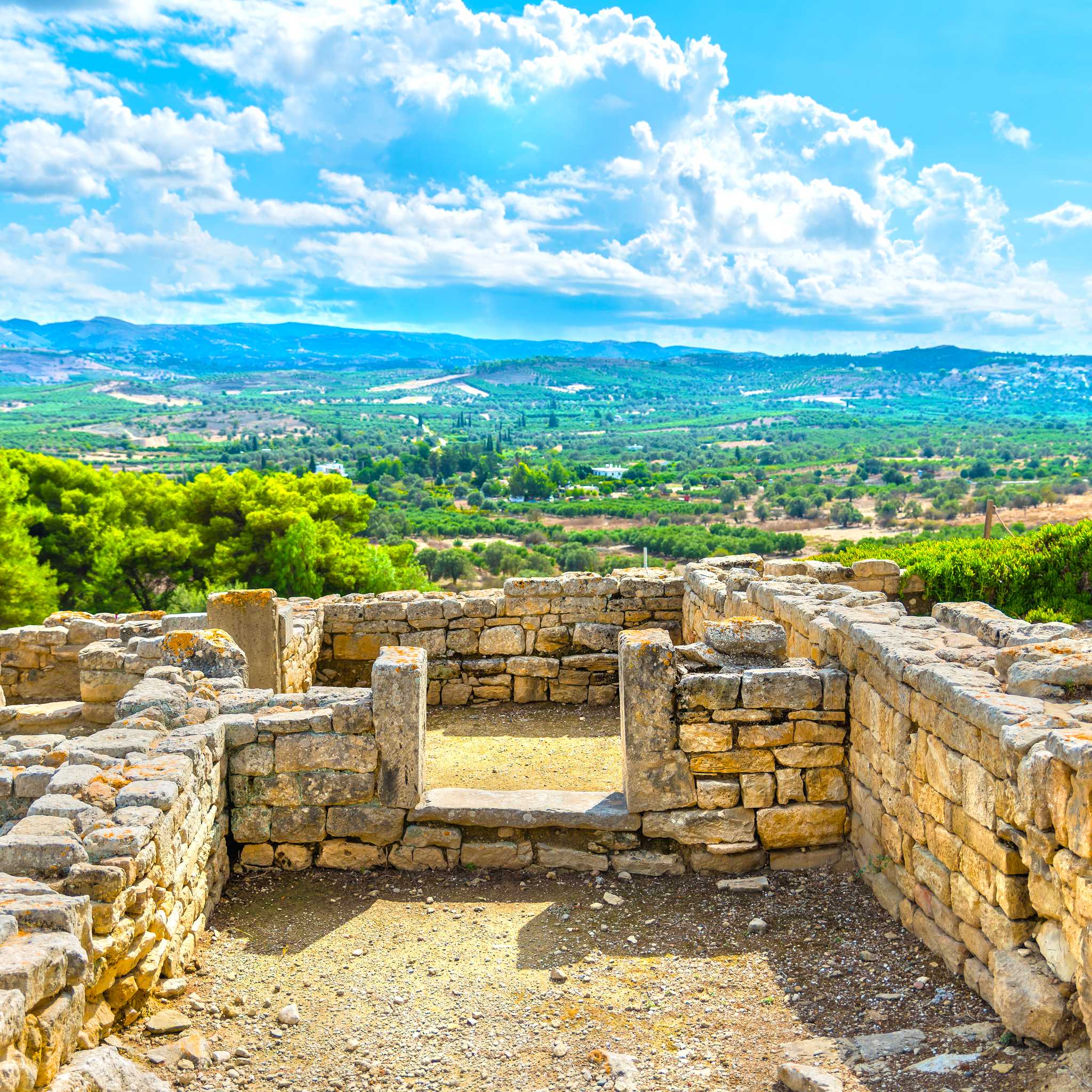
Phaistos is approximately 62 km (39 miles) southwest of Heraklion, on the southern side of Crete. The drive crosses the island through the Messara Plain and takes roughly 1 to 1.5 hours depending on the route and traffic. The landscape changes noticeably as you cross from the north coast to the south — the terrain becomes drier and more open, and the approach to the site includes sweeping views across the plain toward the Libyan Sea. The journey itself is part of what makes Phaistos feel like a genuine expedition.
The Phaistos Disc is arguably the most famous object ever found on Crete. Discovered during excavations in the northern part of the palace complex, this fired clay disc from the Minoan Bronze Age is covered on both sides with stamped symbols arranged in a spiral pattern. Archaeologists have been debating its meaning for over a century — the symbols have never been definitively decoded. The original disc is now on display at the Heraklion Archaeological Museum, but visiting the site where it was unearthed adds a layer of context no museum can fully replicate.
Phaistos is the second most important Minoan site in Crete, but the comparison with Knossos actually works in its favor. Unlike Knossos, Phaistos has not been reconstructed — what you see is original Bronze Age stonework, ceremonial courts, and palatial architecture preserved close to how excavators found it. The scale is impressive: the complex dates back to around 1700 BC, and its monumental entrance, the Theatre Court, and the Tripartite Shrine are among the finest surviving examples of Minoan civic and religious architecture anywhere. If Knossos gave you the interpreted version of Minoan civilization, Phaistos gives you the unfiltered one.
The site is largely outdoors and set across hilly terrain with staircases, so visitors with limited mobility should be aware that some areas may be difficult to navigate. Comfortable, closed-toe shoes are a sensible choice for the uneven ground. The site includes a bookshop with specialist literature on Minoan history if you want to go deeper, and a canteen for refreshments. Morning visits tend to be cooler and quieter before tour groups arrive. Specific opening hours and admission fees are subject to change, so checking current information before you travel is worthwhile.
Phaistos sits on the less-traveled southern coast of Crete, and public transport connections from Heraklion require changes and leave on fixed schedules that limit how long you can spend at the site. Driving yourself means navigating the cross-island route, managing parking, and committing to a return time before you know how the day will unfold. A Daytrip private transfer handles the logistics end to end: door-to-door pickup, a driver who knows the route, and the flexibility to stay as long as the site holds your interest. For a destination this far off the main tourist circuit, that flexibility is the difference between a rushed visit and a memorable one.