No - Picasso's painting "Guernica" was inspired by the 1937 bombing of the town during the Spanish Civil War, but the artwork itself hangs in the Museo Reina Sofia in Madrid, a common point of confusion for first-time visitors. Guernica's own Peace Museum instead uses photographic and audiovisual testimonies to document the bombing and its aftermath, offering a locally grounded, educational perspective on the event and its lasting message about peace.
Guernica sits about 34 km (21 miles) from Bilbao, and a private transfer typically takes approximately 30-45 minutes depending on traffic, compared to regional trains and buses that run on fixed timetables and may require connections. With Daytrip, a driver takes you directly to Guernica and back on a schedule built around your day, without the waiting or transfers that public transport can involve.
Most travelers can cover Guernica's core sites - the Assembly House and Guernica Tree, the Peace Museum, and Santa Maria church - in a few focused hours, making it easy to pair with other stops in the Basque Country on the same day. Because Daytrip's private transfers let you set your own stops and pace, you can shape the visit into a quick highlights tour or a deeper look at the Peace Museum, depending on your interests.
Construction began in 1418 but wasn't completed until 1715, so the church layers several architectural styles across three centuries. It's considered one of the region's notable examples of Gothic architecture, with later additions reflecting its long build. A highlight is the Walcker organ, installed in 1889, which remains a centerpiece for visitors interested in the building's craftsmanship.
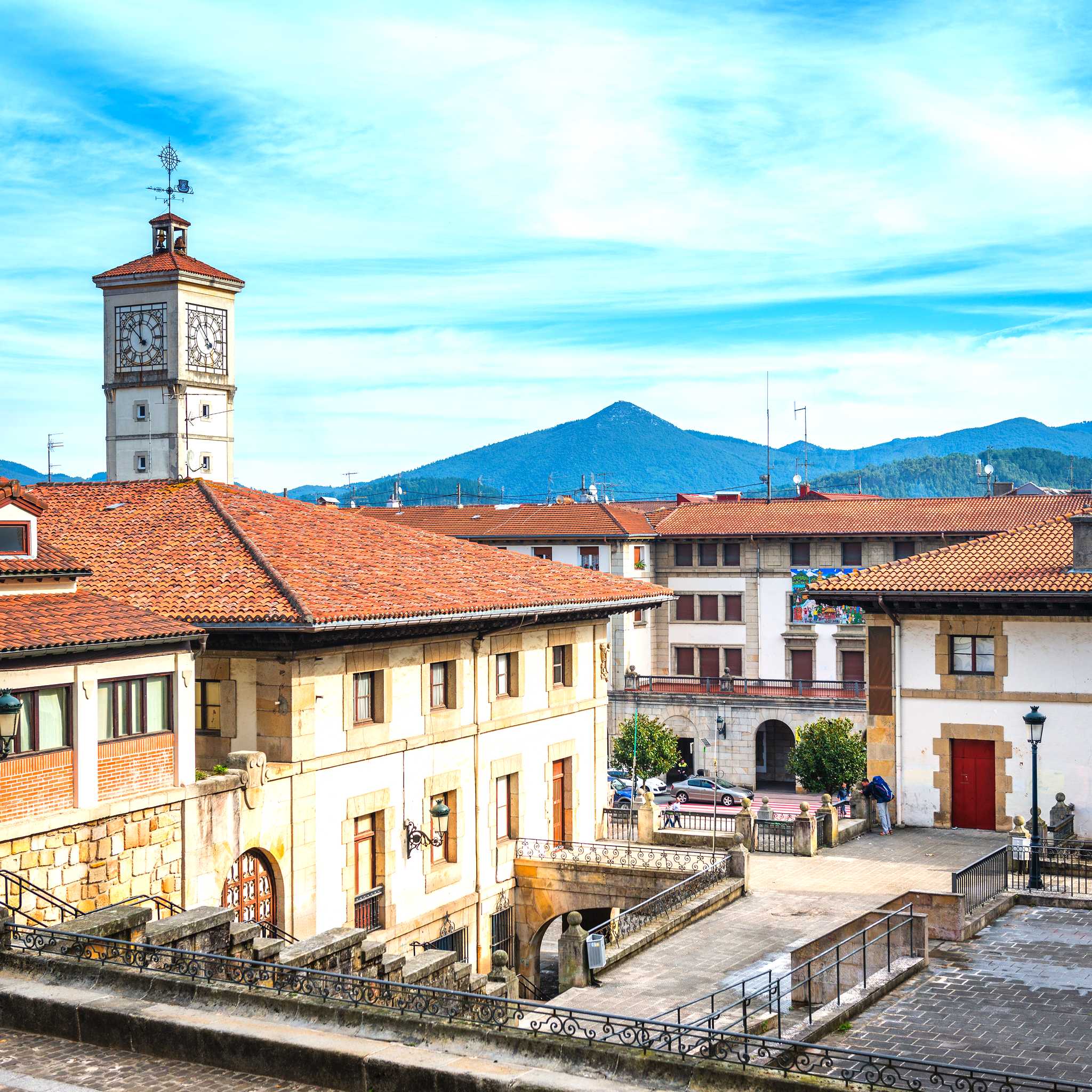
Guernica (Gernika) is one of the most historically significant towns in Basque Country, blending centuries of self-governance with a hard modern history. Beyond its role as a founding trading town from 1366, it's home to the Biscayan Assembly House, where Basque leaders have gathered for centuries, and the interactive Peace Museum, which tells the story of the 1937 bombing and its message of reconciliation. Add the Santa Maria church's layered architecture, and Guernica offers a compact but rich cultural experience for a day trip through the region.
The Casa de Juntas (Assembly House) has served as the meeting place for Basque leaders since the Middle Ages, and it remains a living symbol of Basque self-governance - the Basque president still takes his oath here, beneath the Guernica Tree. Inside, visitors can view portraits of the historic Lords of Biscay and a large stained-glass window illustrating the tree and the assemblies it has hosted, making it one of the clearest windows into Basque political tradition and identity.