Yes. Ercolano is the usual starting point for reaching Mount Vesuvius, with a road climbing most of the way up before a walking path leads to the crater. Pairing the ruins below with the volcano above makes for a natural cause-and-effect day, and a private transfer can handle the winding mountain road directly.
Ercolano sits about 12 km (7 miles) southeast of Naples along the Bay of Naples. A private transfer takes you straight to the archaeological park entrance, avoiding crowded regional trains, and can continue up to Vesuvius or on to Pompeii so you shape the day around what you most want to see.
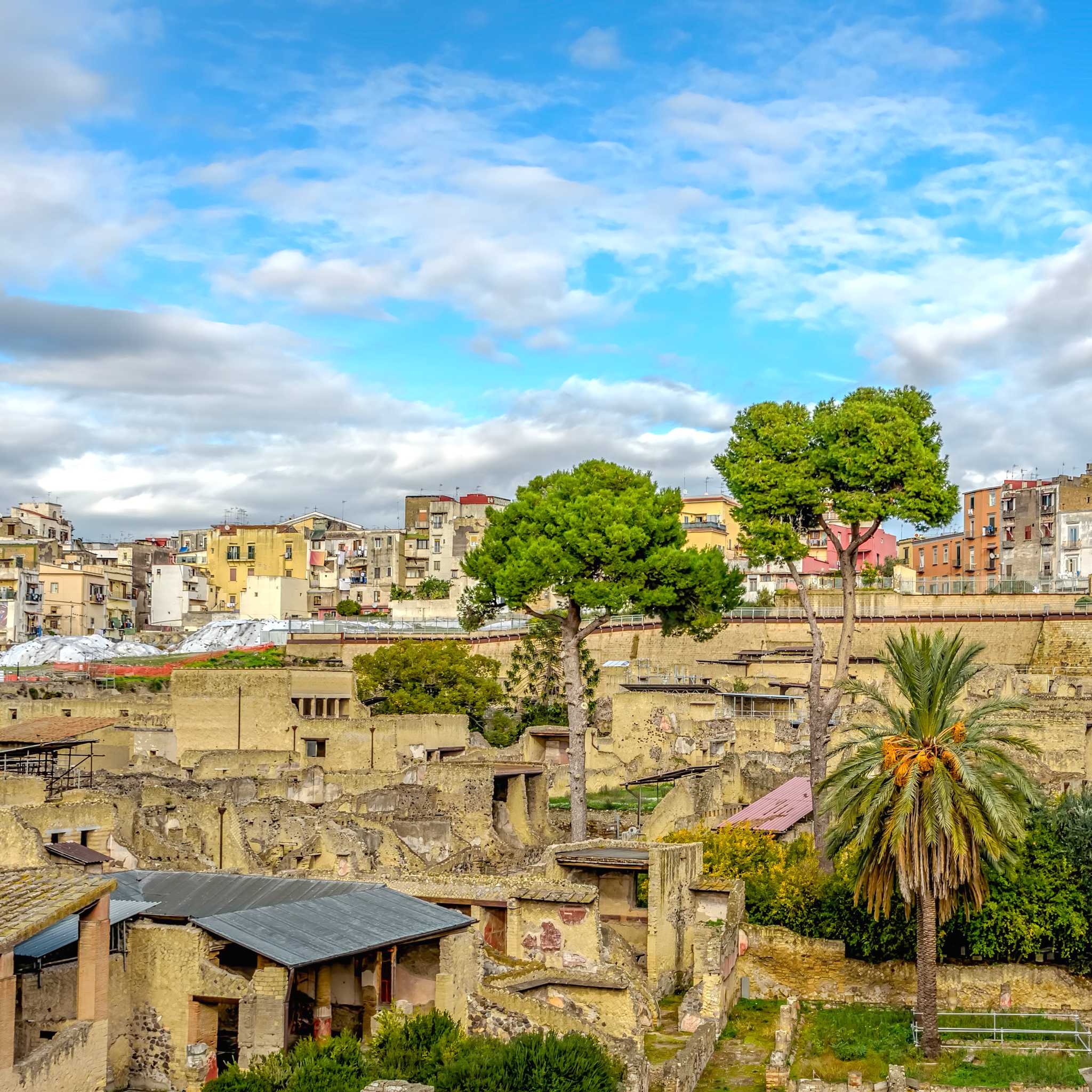
Herculaneum is smaller and more compact than Pompeii, and it's often considered even better preserved. The volcanic material that engulfed it protected upper floors, wooden beams, doors, and even furniture that rarely survive elsewhere. Because the site is more concentrated, you see intimate details of daily Roman life without the long distances and crowds of Pompeii.
Around two to three hours covers the Herculaneum archaeological park at a relaxed pace. If you want to add a trip up Mount Vesuvius to walk the crater rim, plan for most of a day, since the mountain road and the walk up to the crater take additional time.
Ercolano is lined with the Vesuvian Villas of the Miglio d'Oro (Golden Mile), grand 18th century summer residences built by Neapolitan nobility. The MAV, a virtual archaeology museum, uses digital reconstructions to show how Herculaneum and Pompeii looked before the eruption, a helpful contrast to the ruins themselves.
Ercolano is home to Herculaneum, the ancient Roman town buried by the AD 79 eruption of Vesuvius and preserved in remarkable detail. It's also the main gateway to Mount Vesuvius itself, so in one trip you can walk through a frozen Roman town and stand at the crater of the volcano that created it, all on the Bay of Naples.