Yes, and many travelers do. El Fuerte is a departure point for El Chepe, and the stretch of track leaving town begins the railway's most dramatic canyon scenery. If you're riding the rails, a private transfer gets you to the station on your own schedule rather than a fixed shuttle time. If you're not boarding a train at all, El Fuerte still stands on its own as a day trip, no rail ticket required.
Los Mochis, El Fuerte's closest gateway with its airport and the nearby Topolobampo cruise port, sits about 85 km (53 miles) away, roughly 1.5 hours by road. Mazatlan is a different proposition: around 490 km (305 miles), typically 5.5 to 6 hours each way. That drive can still work as a one-way leg toward Copper Canyon, but as a round-trip day excursion, El Fuerte fits far more comfortably from Los Mochis.
Half a day covers the essentials: the plaza and its surrounding landmarks, an hour or so in the museum, and a sit-down meal of local specialties. Because the historic center is compact and walkable, most visitors see the highlights in 3 to 4 hours, leaving room for the drive there and back without feeling rushed, ideal for a day trip rather than an overnight stay.
That's the local legend, and the town leans into it happily. Statues of the masked swordsman turn up around the historic center, tying the fictional character to a place that was, in real history, a genuine seat of colonial power and trade in northwestern Mexico. Whether or not you buy the Zorro story, it adds a playful narrative thread to what is otherwise a serious historic town.
Order the pescado zarandeado, a whole fish butterflied, marinated, and grilled over coals, a Sinaloa signature best eaten fresh in a town that sits right on the Rio Fuerte. Chicharrones are another local staple worth sampling. Since El Fuerte works best as a day trip rather than an overnight stop, plan your visit around a proper sit-down meal rather than a quick bite.
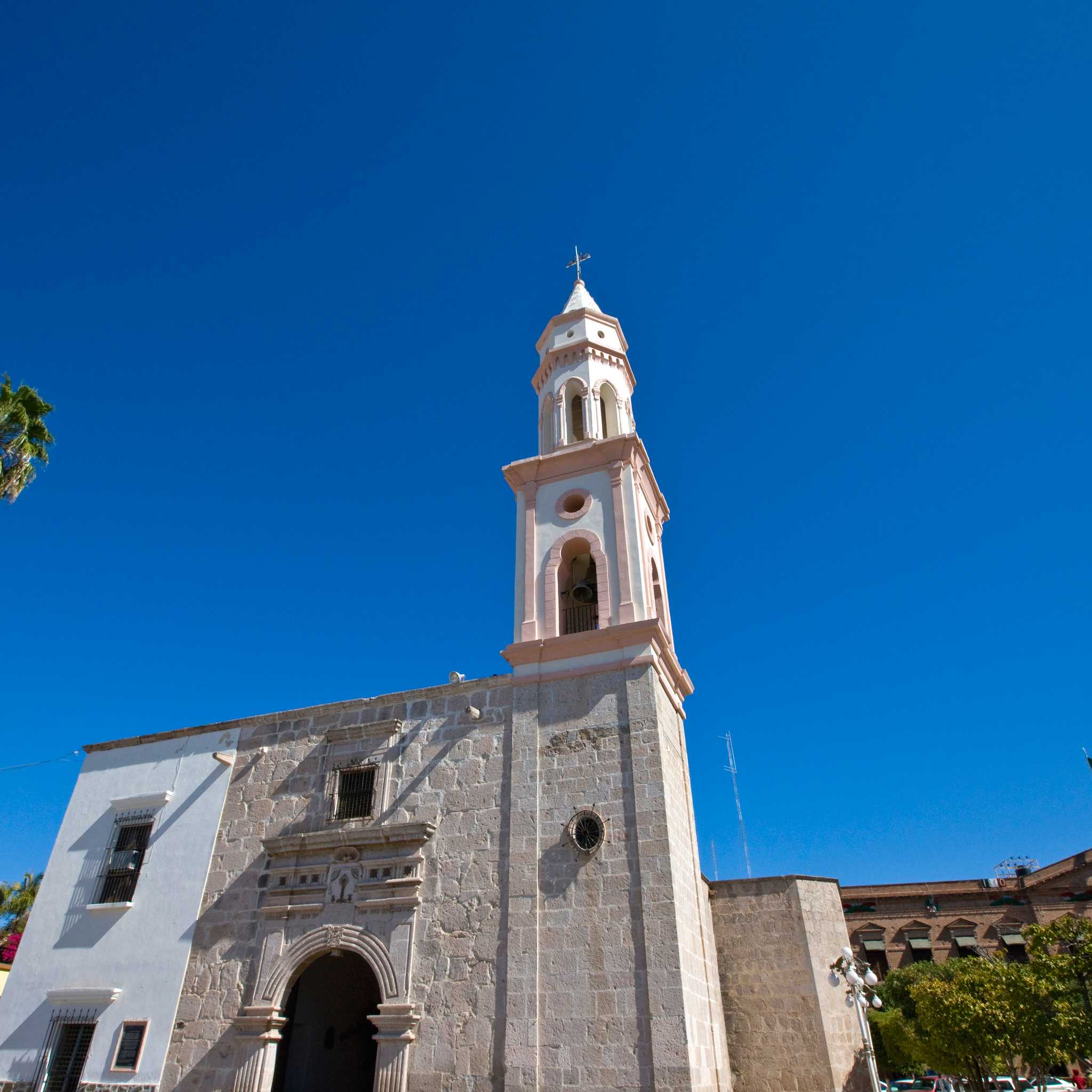
El Fuerte trades cactus and coastline for cobblestone and legend. Its Plaza de Armas, ringed by palm trees and a wrought-iron kiosk, sits beside the Municipal Palace and the Temple of the Sacred Heart of Jesus, echoes of centuries as a commercial and agricultural crossroads. The Museo Mirador del Fuerte Sinaloa fills in the indigenous and mestizo history behind those landmarks, and statues of Zorro, said to have been born here, turn a stroll through town into a bit of a treasure hunt. It's a compact, walkable dose of colonial Mexico built around a real story and real architecture.