Duisburg is approximately 28 km (17 miles) from Düsseldorf, around 50 km (31 miles) from Cologne, and roughly 20 km (12 miles) from Essen. A private transfer from Düsseldorf takes around 30 to 40 minutes, from Cologne approximately 45 to 60 minutes, and from Essen around 25 to 30 minutes depending on traffic. Its central position in the Ruhr metropolitan area makes Duisburg an easy day trip from any of the region's major cities.
Yes, particularly because of Zoo Duisburg. The zoo is one of the largest in Germany and is especially well regarded for its dolphin lagoon, its large primate house, and a strong program of animal encounters designed with younger visitors in mind. The zoo grounds are spacious and easy to navigate, and a half-day here is comfortably achievable before exploring other parts of the city. Landschaftspark Duisburg-Nord is also engaging for older children and teenagers — the industrial landscape, climbable structures, and dive center within the former gas holder make it more interactive than a conventional park visit. A day combining both gives families a genuinely varied Duisburg experience.
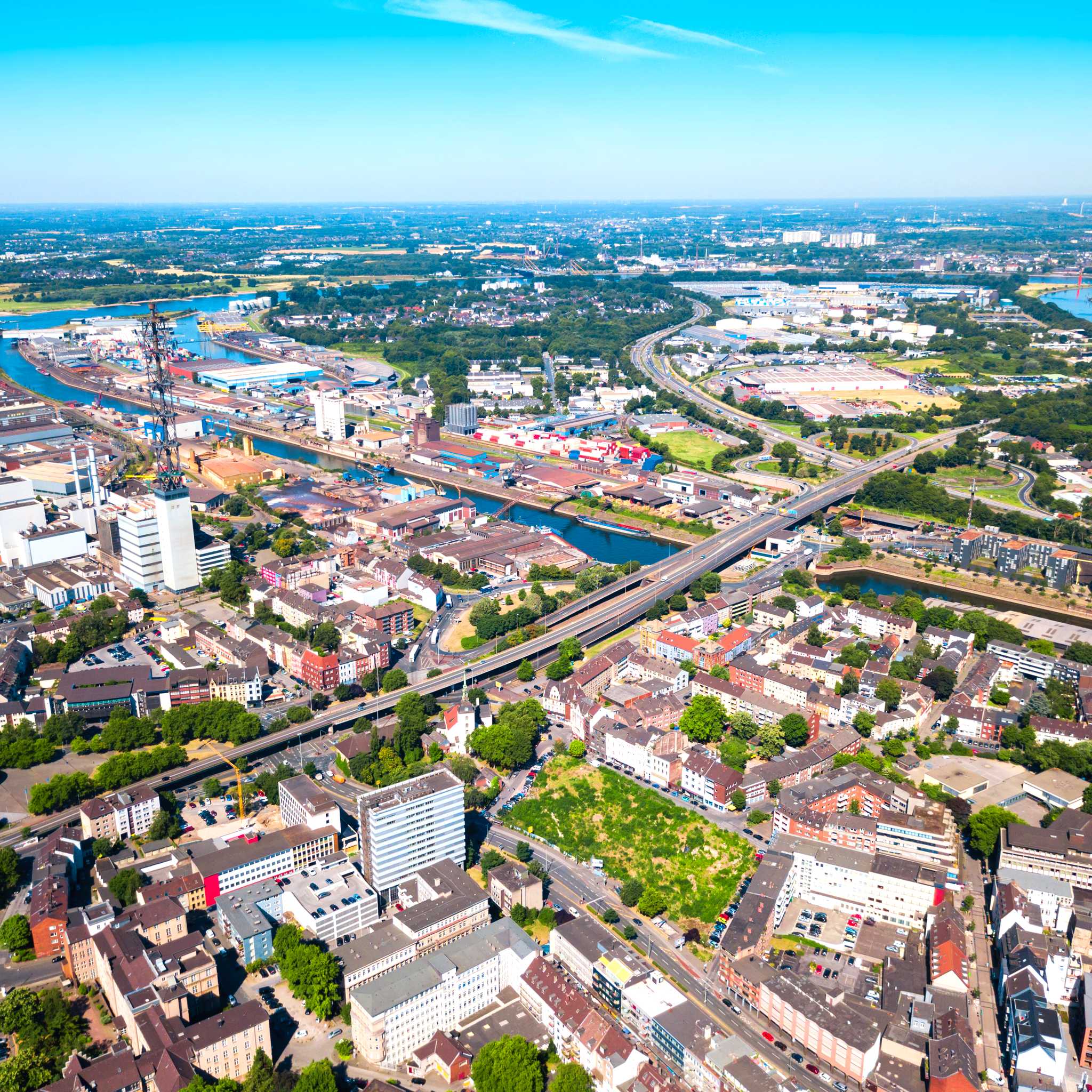
Duisburg operates the largest inland port in the world, handling more freight tonnage than most seaports. The port stretches over 100 km (62 miles) of waterways, with connections to the Rhine giving it direct access to Rotterdam and the broader European waterway network. While the working port is an industrial operation rather than a tourist site, the scale of it is visible from several vantage points around the city and from the Innenhafen area. The contrast between the working port infrastructure and the regenerated Innenhafen district just a short walk away says a lot about how Duisburg has handled its industrial transition — it is a city that has confronted its past rather than hidden it, and that gives a day trip here a depth you do not find in more polished tourist destinations.
Landschaftspark Duisburg-Nord is one of the most striking and original industrial heritage sites in Europe. A former iron and steel works that closed in 1985, the entire complex — blast furnaces, ore bunkers, gas holders, and industrial halls — was left standing and transformed into a public park and cultural venue rather than demolished. You can climb the blast furnace tower for panoramic views across the Ruhr, walk through cavernous ore bunkers that now serve as performance spaces and event venues, and explore the grounds at your own pace. At night the structure is illuminated in color, but even by day the sheer scale of the site is genuinely unlike anything most travelers have encountered. It is a compelling destination for architecture and industrial history enthusiasts, and a fascinating experience even for those who are neither.
Duisburg's Innenhafen — the inner harbor — is a revitalized former grain port that has become one of the most architecturally interesting waterfronts in the Ruhr area. The centerpiece of the redevelopment is the three distinctive Frank Gehry buildings, the most striking example of the architect's work in Germany outside of his better-known global projects. The district also contains the Museum Küppersmühle for Modern Art, housed in a converted warehouse and holding one of the strongest collections of post-war German art in the country, with works spanning abstract expressionism through contemporary painting. The waterfront promenade is ideal for a walk between visits to the museum and the Gehry buildings, and the contrast between the 19th-century brick warehouses and the contemporary architecture gives the area a character that is unique to Duisburg.
The Ruhr region is well connected by rail, but Duisburg's main highlights — Landschaftspark in the north, the Innenhafen in the center, Zoo Duisburg to the south — are spread across the city rather than clustered around the station. Getting between them by public transport involves additional planning and time. A private Daytrip transfer picks you up from your hotel or preferred starting point and takes you directly to Duisburg with the flexibility to structure your day around the sites that interest you most. You can also add sightseeing stops along the way — for travelers coming from Cologne or Düsseldorf, the Rhine corridor and surrounding Ruhr landscape offer worthwhile pauses. Your driver works around your schedule, so if you want to spend longer at Landschaftspark or catch the Innenhafen in the late afternoon light, the day adapts to you rather than the other way around.