Yes, and most travelers do. The two towns sit on opposite sides of the same small harbour, just a few hundred meters apart by footbridge or the little passenger ferry that crosses the water. A private transfer can drop you in one town and pick you up from the other, letting you explore both without doubling back.
Ciboure sits right on the French-Spanish border area of the Basque coast. It's about 19 km (12 miles) from Biarritz and its airport, and roughly 20 km (12 miles) from San Sebastián across the border in Spain. From Bordeaux it's around 200 km (124 miles), typically covered in a comfortable private transfer with the flexibility to stop en route.
Two to three hours covers the harbour, the old town streets, and Fort de Socoa comfortably. Ciboure is compact and walkable, so it pairs naturally with a stop in Saint-Jean-de-Luz to fill out a full day rather than needing one on its own.
Start at the quay where Ravel was born, then wander Rue Pocalette for the town's most photographed row of colorful facades. Église Saint-Vincent has a distinctive Basque interior with wooden galleries, and a short walk along the water leads to Fort de Socoa, a 17th-century fortification with sweeping views over the bay to Saint-Jean-de-Luz and, on clear days, the Spanish coast.
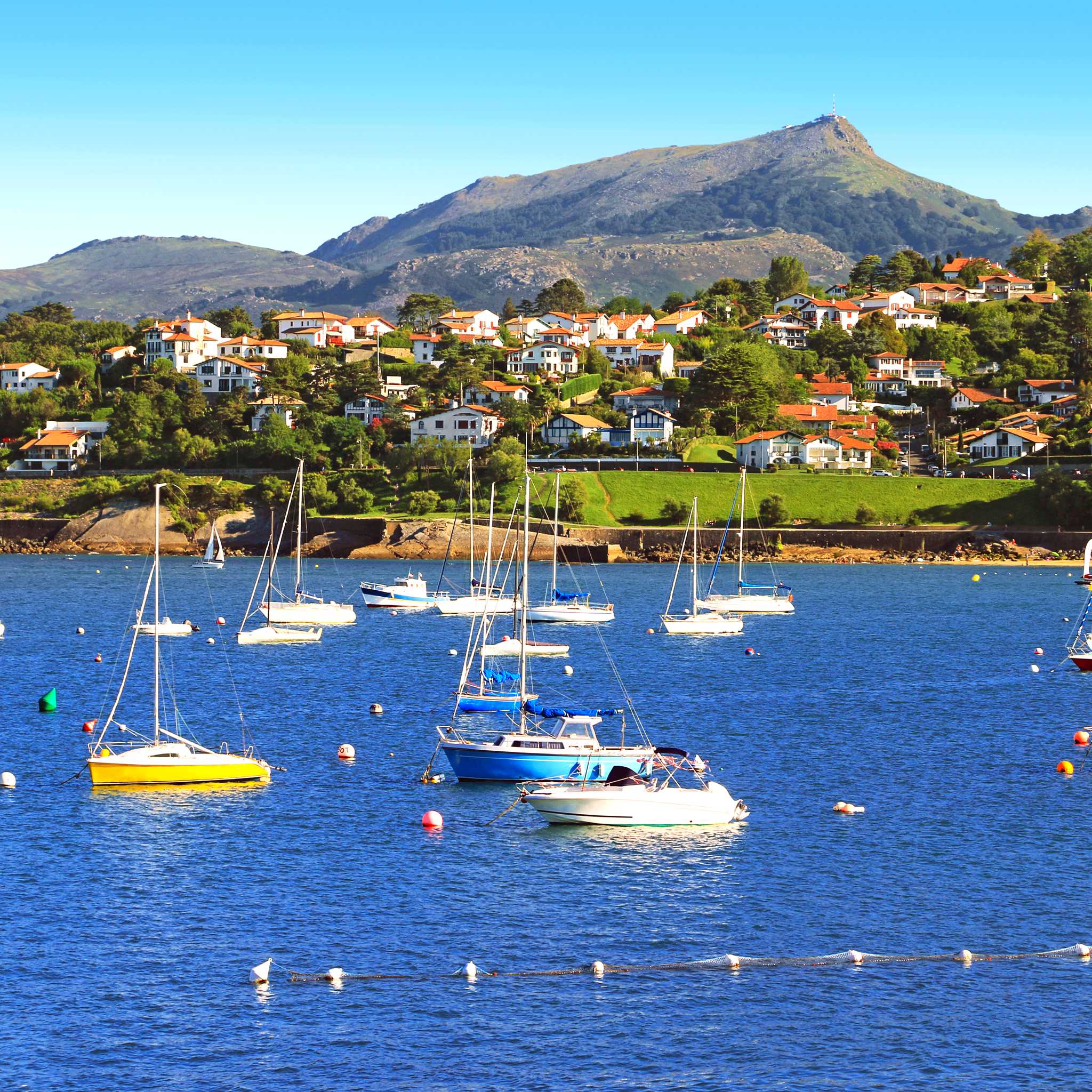
Ciboure is the quieter, more authentic half of the harbour it shares with Saint-Jean-de-Luz. Composer Maurice Ravel was born here, and the waterfront still looks the part: half-timbered Basque houses in deep red and green line the quay, fishing boats unload the day's catch, and Fort de Socoa guards the bay entrance. It gives you real Basque coastal life without the crowds of its better-known neighbor.
Linger at the working fishing port, where boats still bring in tuna and anchovy, and browse the small local markets near the quay for Basque specialties like piperade or ttoro fish stew. The town moves at its own unhurried pace, so the best approach is simply to walk the waterfront and old streets rather than rush through a checklist of sights.