Yes, several hill tribe communities including Akha, Karen, Lahu, and Lisu people live in the mountains surrounding Chiang Rai. Ethical tour operators offer village visits, homestays, and cultural exchanges respecting indigenous traditions. These experiences provide insights into traditional lifestyles, handicrafts, and agricultural practices. Visitors should choose responsible tourism operators prioritizing community benefit and cultural sensitivity over exploitative tourism practices that treat villages as human zoos.
Yes, the Golden Triangle sits just 60 kilometers (37 miles) north of Chiang Rai, about 1.5 hours by car. This historic region marks where Thailand, Myanmar, and Laos borders meet at the Mekong River. Visitors can view all three countries simultaneously, visit opium museums documenting the area's infamous drug trade history, take Mekong boat trips, and explore border markets selling goods from neighboring countries.
Chiang Rai sits approximately 180 kilometers (112 miles) north of Chiang Mai through scenic northern Thailand mountains. The journey takes about 3-3.5 hours by car or bus through mountainous terrain and small towns. Many travelers visit both northern cities, with Chiang Mai offering more developed tourism infrastructure while Chiang Rai provides quieter exploration of temples, nature, and cultural experiences near the borders.
Northern Thai cuisine in Chiang Rai features khao soi (coconut curry noodles), sai ua (northern Thai sausage), nam prik noom (spicy green chili dip), and sticky rice. The night market offers diverse street food including grilled meats, fresh spring rolls, and tropical fruits. Local coffee from nearby plantations and Chinese-influenced dishes reflect the border location. The food tends to be less spicy than southern Thai cuisine with unique regional flavors.
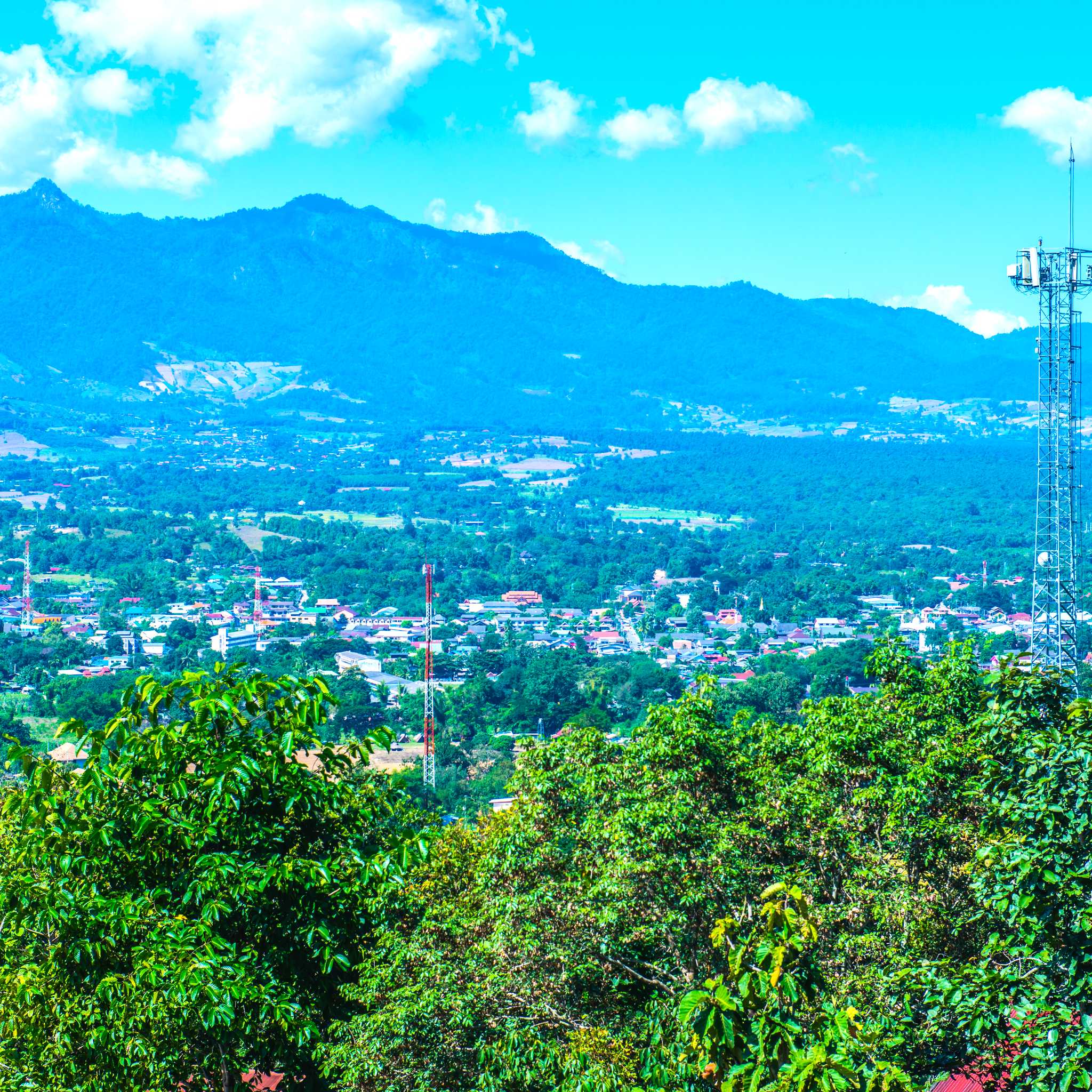
Chiang Rai is a laid-back city in northern Thailand famous for the stunning White Temple (Wat Rong Khun), Blue Temple (Wat Rong Suea Ten), and proximity to the Golden Triangle where Thailand, Myanmar, and Laos meet. The region offers hill tribe villages, tea plantations, hot springs, and a more relaxed atmosphere than busy Chiang Mai while providing gateway access to Thailand's mountainous northern frontier.
Wat Rong Suea Ten (Blue Temple) is a stunning sapphire-blue temple featuring intricate carvings, golden details, and a massive white Buddha statue inside. Completed in 2016 by students of the White Temple's creator, it showcases contemporary Thai religious art with deep blue symbolizing wisdom and meditation. The temple sits in Chiang Rai city, offering free entry and fewer crowds than the White Temple while providing equally spectacular photography opportunities.
Wat Rong Khun (White Temple) is an unconventional contemporary Buddhist temple designed by artist Chalermchai Kositpipat. The entirely white structure features intricate carvings, mirror mosaics, and surreal sculptures combining Buddhist teachings with pop culture references. The otherworldly design attracts photographers and architecture enthusiasts worldwide. Located 15 kilometers south of Chiang Rai, it remains active for worship while serving as Thailand's most unique artistic temple.
November through February offers the best weather with cooler temperatures (15-25 degrees Celsius), clear skies, and minimal rainfall perfect for temple visits and outdoor activities. March through May brings extreme heat before monsoon season. June through October sees afternoon rains but lush green landscapes and fewer tourists. The cooler season provides ideal conditions for exploring northern Thailand's mountains, though accommodation prices rise slightly during peak winter months.