Yes. Its position in central Portugal near the Spanish border makes it a natural stopover for anyone driving between Lisbon or Porto and Madrid. Rather than a straight highway run, a private transfer lets you break up the journey with a few hours in Castelo Branco, seeing the garden and castle ruins, before continuing on to your next destination.
Castelo Branco sits about 225 km (140 miles) from Lisbon, roughly a 2 to 2.5 hour private transfer, and about 390 km (242 miles) from Madrid, generally around 4 to 4.5 hours. Trains and buses typically require connections and fixed schedules, while a private transfer takes you door to door in comfort, with stops along the way if you'd like them.
A half day, around 3 to 4 hours, is enough to stroll the Jardim do Paço Episcopal, climb to the Templar castle ruins, and wander the old town's cobblestone streets. With a private transfer you set the pace, so you can linger longer at the garden's statue-lined staircases or add a visit to a colchas workshop without worrying about a return schedule.
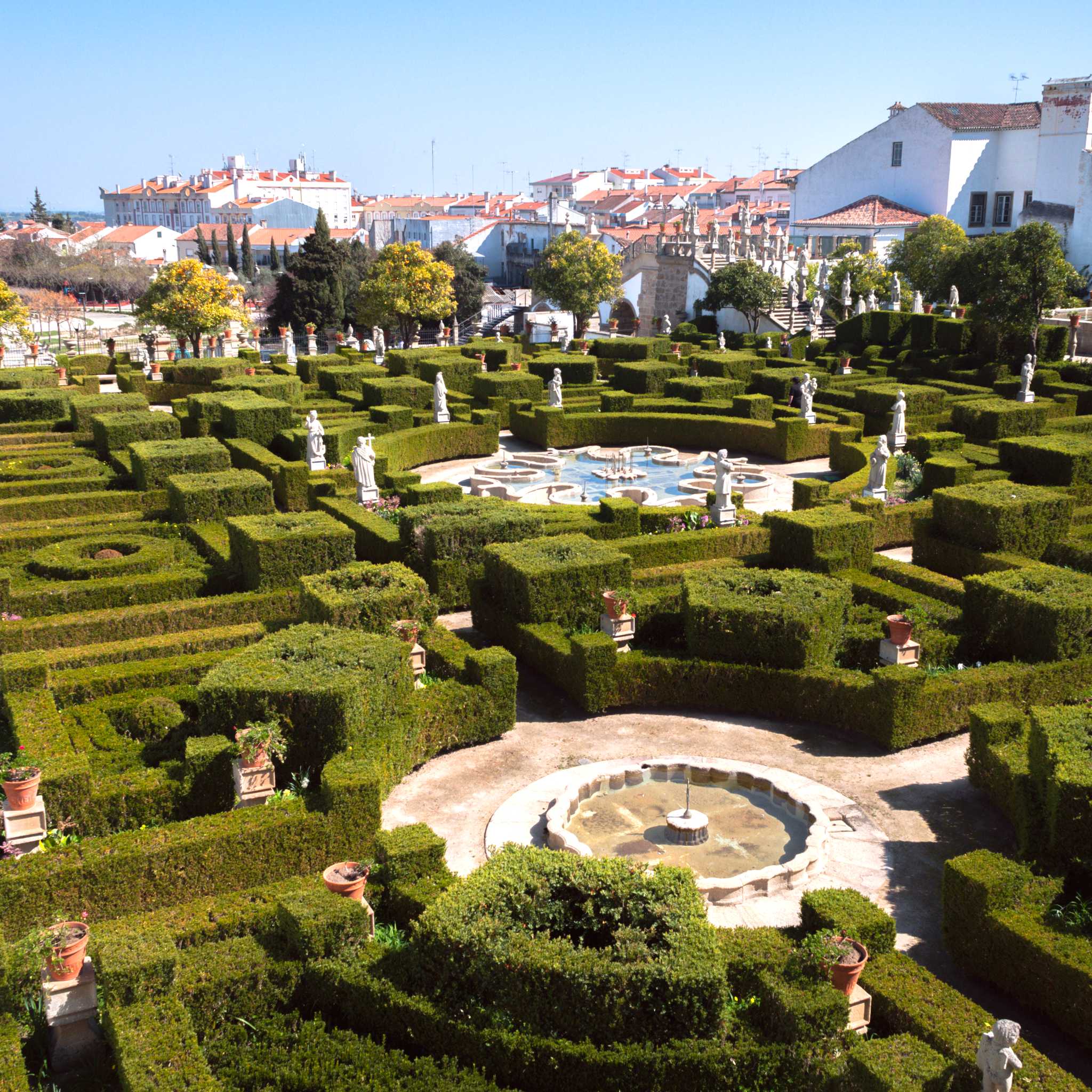
The Jardim do Paço Episcopal is the standout, its terraced staircases flanked by statues of Portuguese kings. Above the town, the Torre de Menagem marks the remains of a 13th-century Templar castle with panoramic views. Round it out with the old town's narrow streets and a look at the region's famed hand-embroidered silk bedspreads, the colchas de Castelo Branco, at a local museum or workshop.
Bishop João de Mendonça commissioned the garden in the early 1700s in the Italian baroque style. The staircases are lined with granite statues of Portuguese monarchs arranged in chronological order, alongside a row of Spanish kings carved noticeably shorter, a centuries-old bit of political satire that still makes visitors smile today.
Castelo Branco offers a slice of authentic Portugal most travelers never see. The Jardim do Paço Episcopal, an 18th-century baroque garden lined with granite statues of kings, sits beside the hilltop ruins of a Templar castle with sweeping views over the Beira Baixa countryside. Add in a medieval old town and the centuries-old craft of hand-embroidered silk colchas, and you get a rich cultural stop without the crowds of Lisbon or Porto.