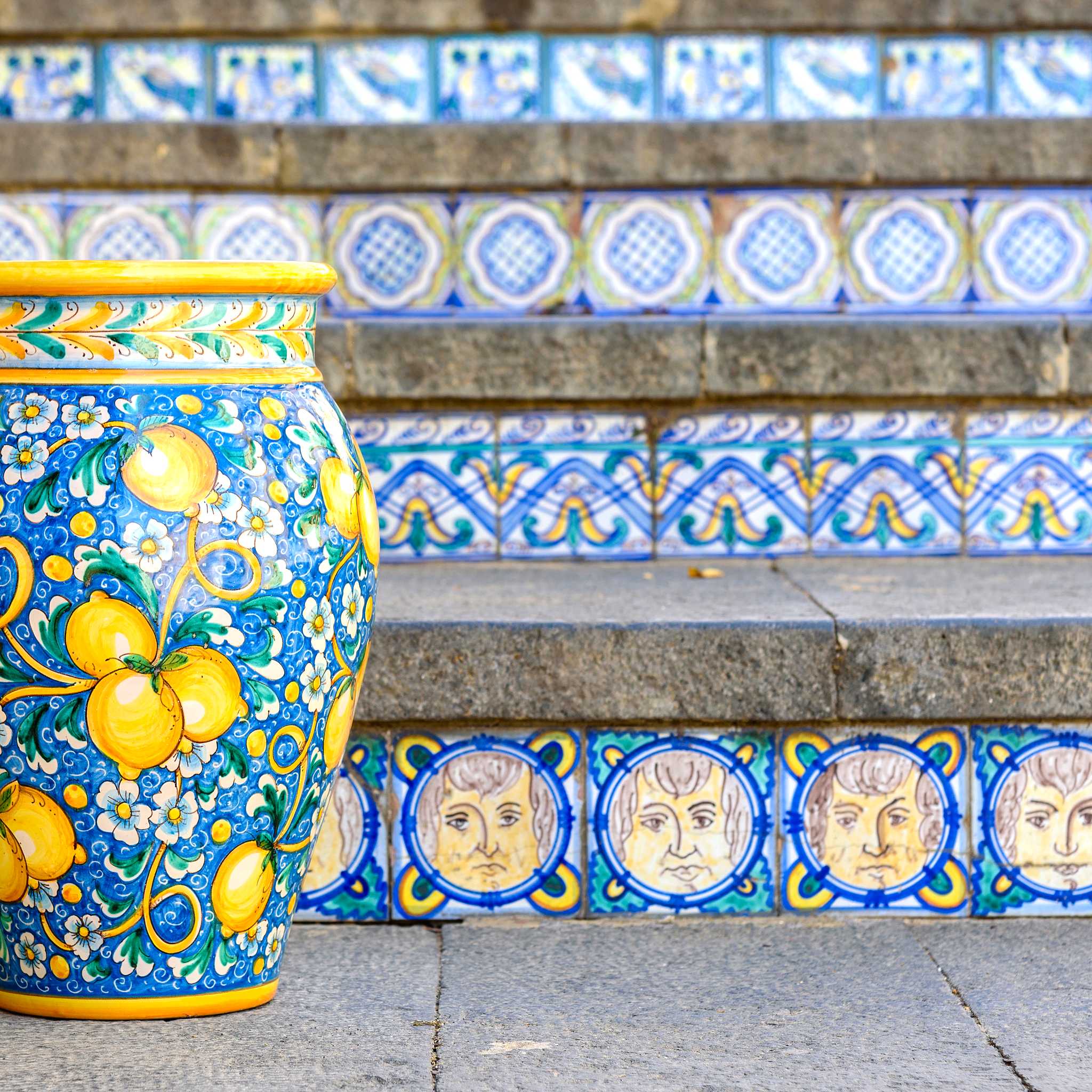
Yes, the town remains a working pottery center, not just a display case. Workshops tucked into the side streets away from the staircase tend to sell pieces made on-site rather than mass-produced souvenirs, and many artisans are happy to show you their process. Building browsing time into your visit is worth it if ceramics are a highlight for you.
Caltagirone sits inland, roughly equidistant from Sicily's east coast and south coast. It's about 66 km (41 miles) from Catania, 57 km (35 miles) from Ragusa, 106 km (66 miles) from Syracuse, and 124 km (77 miles) from Taormina. Driving times run from roughly 1 to just under 2 hours depending on your starting point, making it a realistic day trip from any of these bases. A private transfer covers the inland roads directly, without the transfers and gaps in service that come with train or bus connections to a town this size.
A half day is enough to see the essentials: climbing the 142 ceramic-tiled steps of Scalinata di Santa Maria del Monte, wandering the Baroque old town, and browsing a few pottery workshops. Three to four hours covers it comfortably, leaving room to pair Caltagirone with a nearby town like Piazza Armerina or Ragusa for a fuller day out.
The steps are broad and shallow rather than steep, but climbing all 142 does take some stamina and comfortable shoes. You don't need to reach the top to appreciate the tilework, many of the best-preserved and most photogenic designs are within the first third of the staircase. A driver who knows the town can also drop you near the base so you're not wasting energy on the walk in.
Caltagirone times two signature events around its staircase: an elaborate flower display that covers the steps in late spring, and thousands of flickering oil lamps that light them on summer nights for the Festa di San Giacomo. Visiting outside these dates still shows off the permanent tilework, but travelers with flexible timing can check the current year's festival calendar and plan around either display for a more dramatic version of the same landmark.
Its ceramic tradition sets it apart. Every vertical riser on the 142-step Scalinata is faced with a unique hand-painted tile, tracing pottery styles from the 9th to the 19th century in a single staircase. Combined with the town's UNESCO-listed Baroque rebuild after the 1630 earthquake, Caltagirone offers a denser concentration of decorative craftsmanship than almost anywhere else on the island.