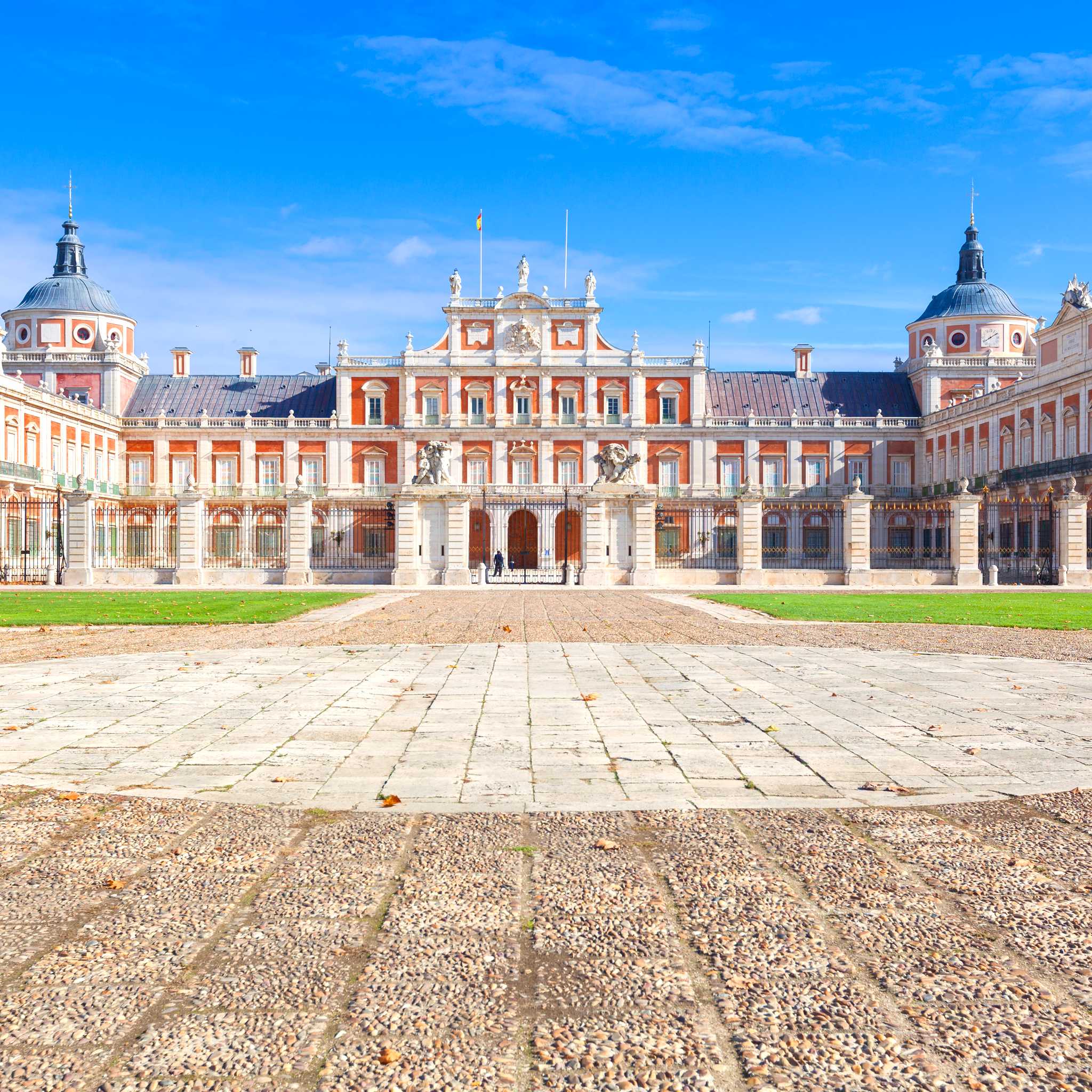
Aranjuez sits around 47 km (29 miles) south of Madrid. A private transfer typically takes roughly 45 minutes to an hour depending on traffic and your pickup point, with a professional driver managing the route so you don't have to plan connections or watch a schedule. That makes it easy to arrive relaxed and ready to start with the palace rather than the logistics.
A half day covers the palace, gardens, and a walk through the Old Quarter at a comfortable pace, while a full day leaves room to linger in the gardens or sample local strawberries and asparagus without rushing. Music lovers may also recognize the town's name from Joaquín Rodrigo's Concierto de Aranjuez, inspired by these same gardens. A private transfer makes it easy to set your own pace, whether that means an efficient half day or a slower, fuller one.
Aranjuez packs royal history, ornate architecture, and riverside gardens into a compact town just south of Madrid. It grew from a 12th century holding of the Order of Santiago into a royal site under Ferdinand and Isabella, then into a full royal residence once Philip II commissioned the palace in the 16th century. UNESCO has recognized the whole town and its landscape along the Tagus River as a Cultural Landscape, a rare designation that credits the way palace, gardens, and town were designed to work together. Few day trips from Madrid offer this much layered history in one walkable setting.
The palace gardens were laid out with Versailles as a reference point, and they carry that same sense of scale, with fountains, manicured groves, and shaded paths along the Tagus. Inside the grounds sits the Casa del Labrador, a lavish garden pavilion whose modest name undersells its ornate interior. Between the formal plantings and the pavilion, the gardens function as an extension of the palace itself rather than a separate stop, turning the grounds into another room worth exploring at a relaxed pace.
The palace interior is one of the more eclectic in Spain, mixing Rococo, Elizabethan, Chinese, and Moorish decor across its staterooms. Each section reflects a different era of royal taste, from gilded French-style salons to rooms styled after Chinese porcelain and Moorish tilework. For centuries the town and palace were reserved for nobility, so the interiors were built to impress rather than serve everyday life. Walking through room after room in contrasting styles is one of the more memorable parts of visiting.
Aranjuez's Old Quarter is a designated Artistic Monument in its own right, laid out with Baroque town planning and lined with noble architecture built for the courtiers who once needed to live near the crown. Wide, orderly streets and stately façades reflect the 18th century redesign that shaped much of the town. It rewards an unhurried walk after the palace, and it's also where the local flavor of Aranjuez comes through in its strawberry and asparagus stands, produce the region has been known for.