Yes, and many travelers choose to do exactly that. The broader Angkor Archaeological Park encompasses dozens of temples within a compact area, and combining Angkor Wat with Angkor Thom (the walled royal city containing the Bayon temple, famous for its stone faces) and Ta Prohm (where tree roots have overtaken the ruins) is a popular full-day circuit. The three sites together can be covered in 7 to 9 hours at a comfortable pace. Having a driver who can move you efficiently between sites — and wait while you explore at your own speed — makes this kind of multi-temple day significantly more manageable than relying on shared transport.
Most visitors spend between 4 and 6 hours at the complex itself to do it justice. The main temple alone rewards a couple of hours of unhurried exploration, and the surrounding grounds — including the reflective moat and approach causeway — add to the experience. If your day trip includes nearby temples like Angkor Thom, Ta Prohm, or Bayon, plan for a full day out. Arriving early is worthwhile: the complex is cooler in the morning and the quality of light is exceptional at sunrise, when the temple spires reflect in the moat.
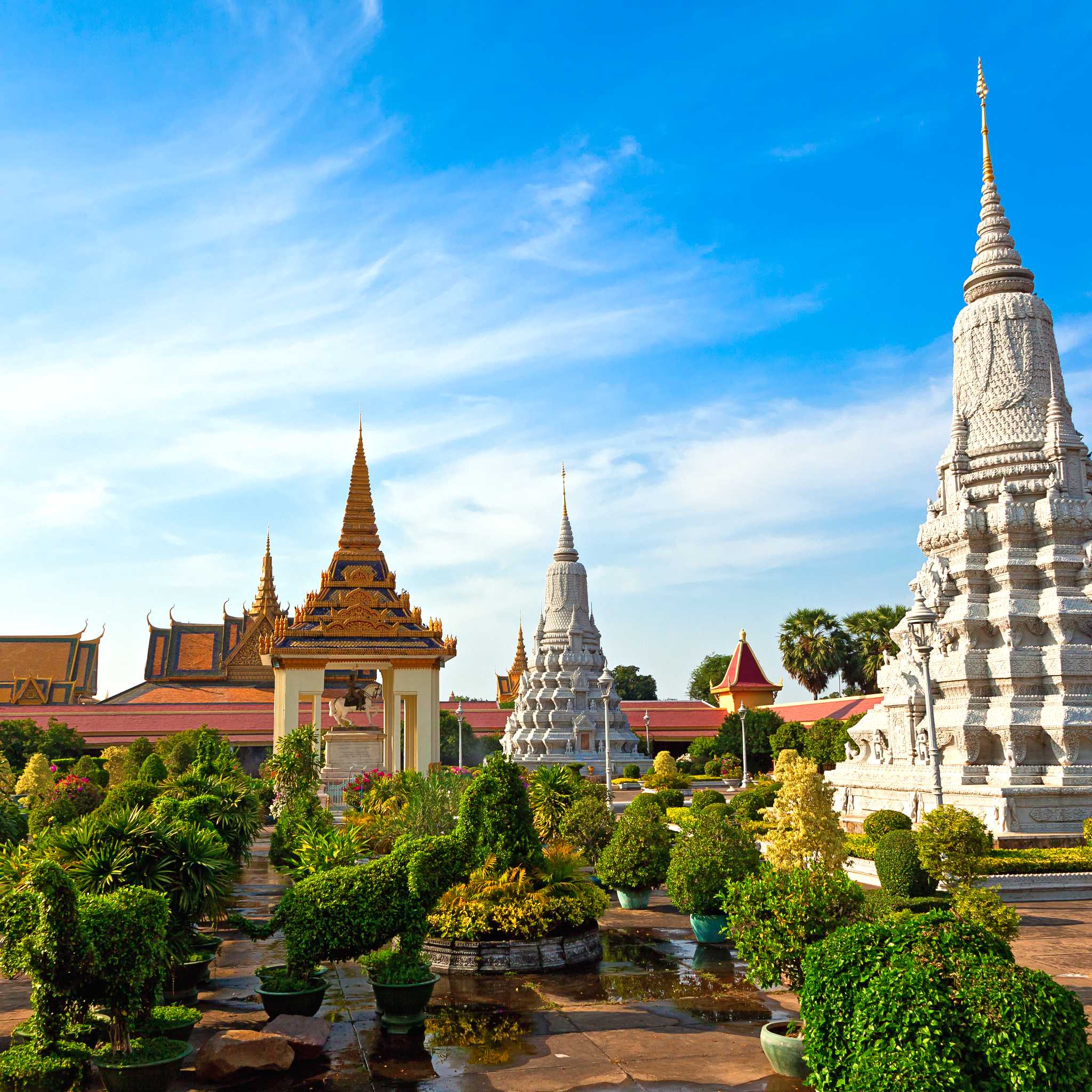
The central tower, standing at roughly 65 meters, is the focal point and offers sweeping views across the complex. The west entrance causeway, flanked by serpent balustrades, creates one of the most iconic approach sequences in world architecture. The Hall of a Thousand Pillars and the inner galleries of bas-reliefs — particularly the scenes depicting the Churning of the Ocean of Milk — are among the most detailed stone carvings anywhere on earth. Walking the complex counterclockwise, as tradition holds, helps orient you through its symbolic layout: Angkor Wat was designed as a physical replica of the Hindu universe, with its towers representing the peaks of Mount Meru.
Angkor Wat is one of the most extraordinary human achievements on earth — a 162.6 hectare temple complex built in the 12th century that rivals the architectural ambitions of ancient Greece and Rome. What makes it genuinely arresting is the detail: an 800-meter bas-relief wrapping the exterior of the central temple, depicting battles and mythology with cinematic scope, and over 3,000 individually carved apsara (heavenly nymphs), each with a unique face and hairstyle. No photograph prepares you for the scale. A day trip gives you enough time to explore the main temple, walk the outer galleries, and absorb the atmosphere without the blur of a rushed tour.
Angkor Wat is a functioning religious site, so dress modestly — covered shoulders and knees are generally expected, particularly when entering the inner sanctuary. Check current site guidelines before your visit to confirm the latest requirements. Comfortable walking shoes are essential given the uneven stone surfaces and the distances involved across the grounds. The Cambodian sun is intense year-round, so sunscreen, a hat, and water are non-negotiables. The complex opens early in the morning, and the first hours of the day offer the most pleasant temperatures and the best conditions for photography before crowds build. Having a knowledgeable local driver can also make a practical difference — someone who knows the site layout and can point you toward the most rewarding routes through the complex.
Angkor Wat sits approximately 6 km (3.7 miles) north of Siem Reap city center, making Siem Reap the natural base for any visit. The journey by road takes around 15 to 20 minutes under normal conditions. While tuk-tuks and shared minibuses are common options, a private transfer gives you the flexibility to set your own departure time — particularly valuable if you want to arrive at sunrise — and ensures a comfortable, air-conditioned return journey after a long day on foot in the Cambodian heat.